
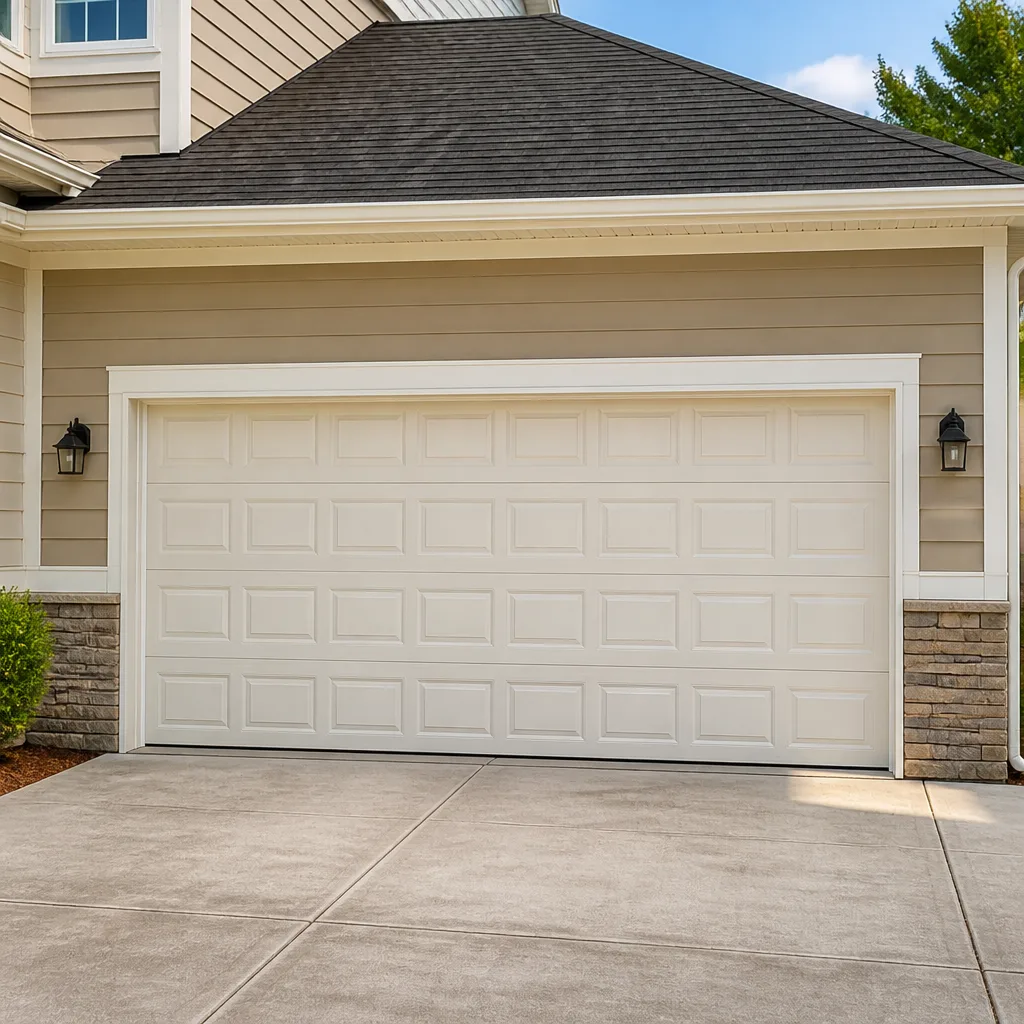
 Raised-panel steel
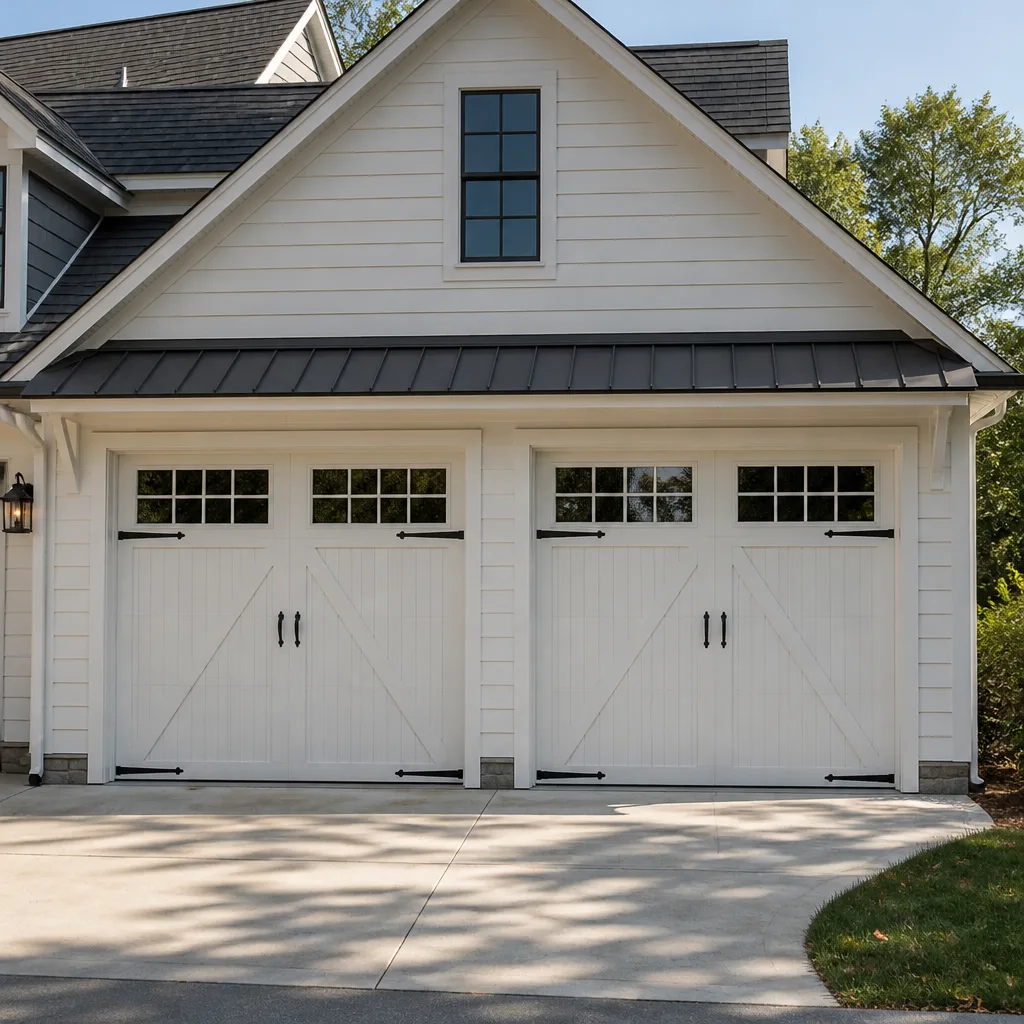 Carriage house
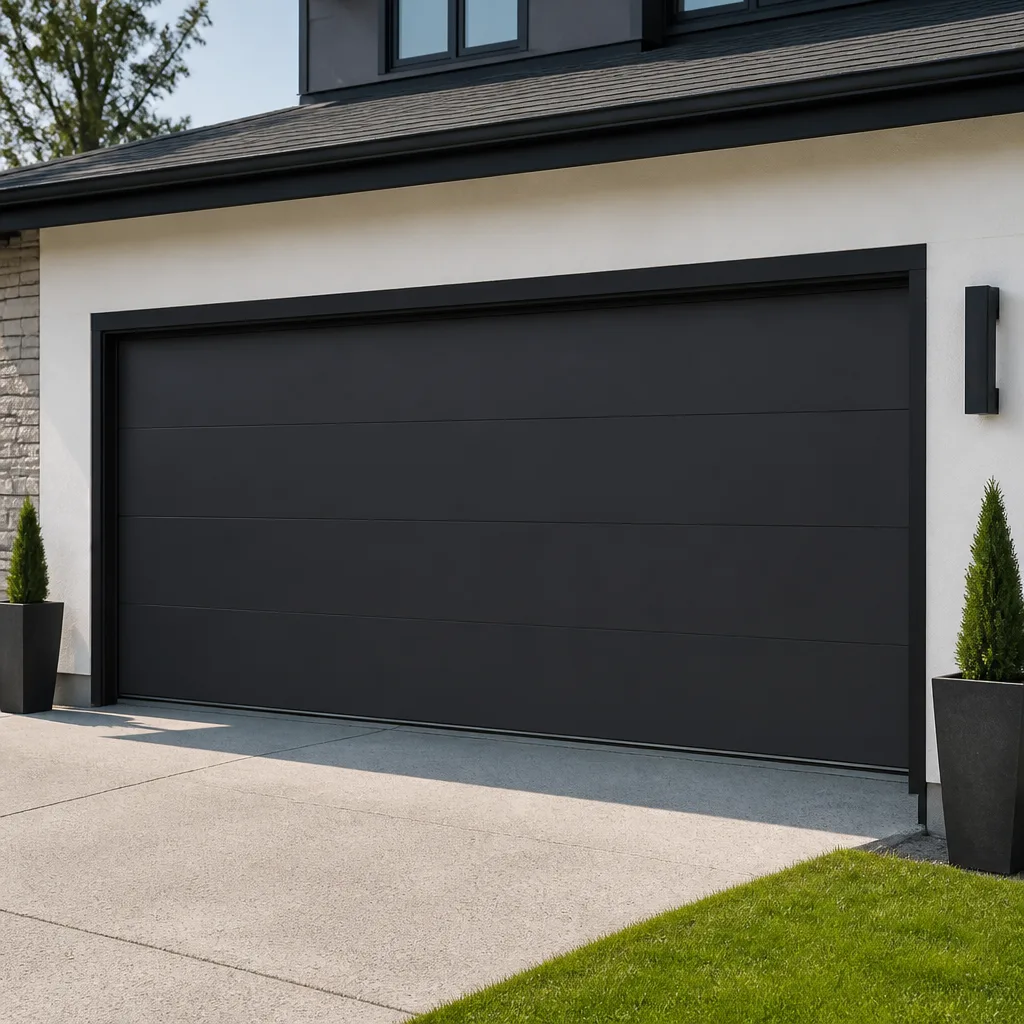 Modern flush
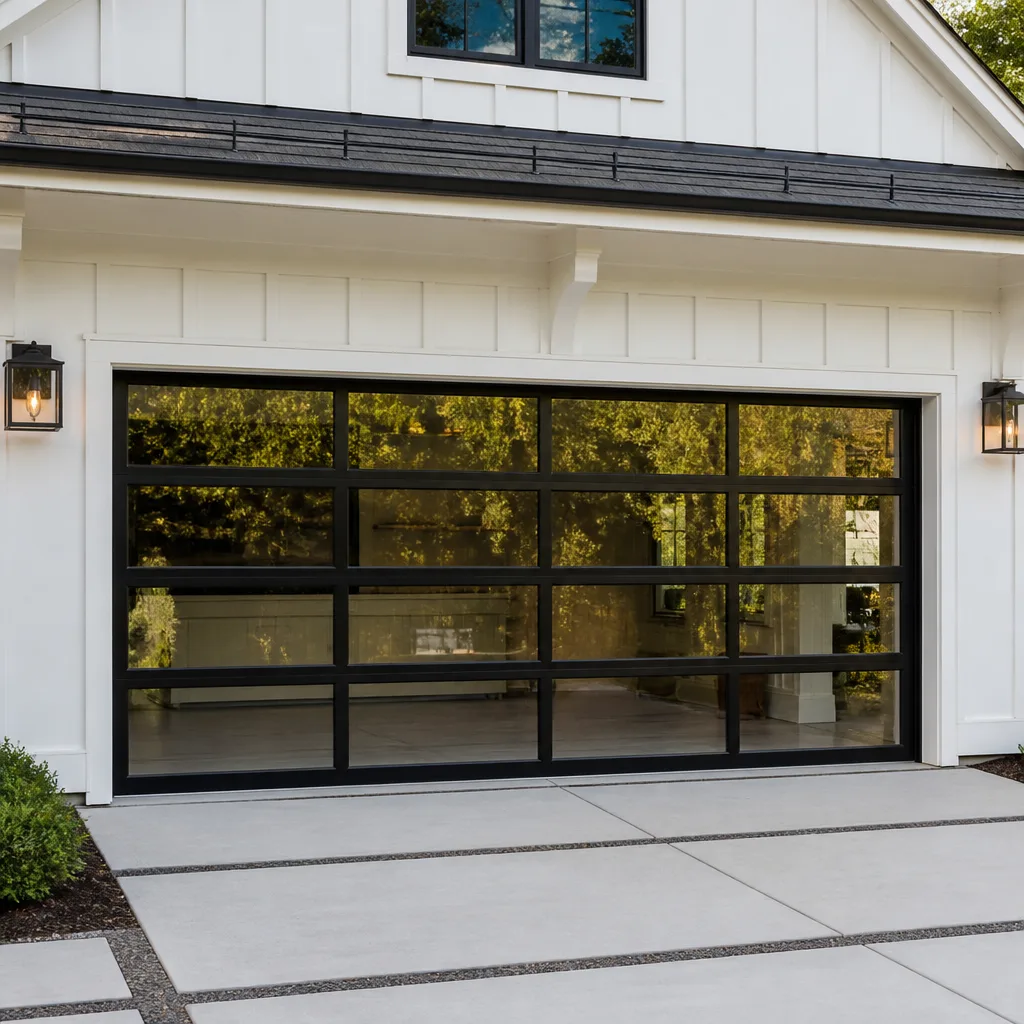 Full-view glass
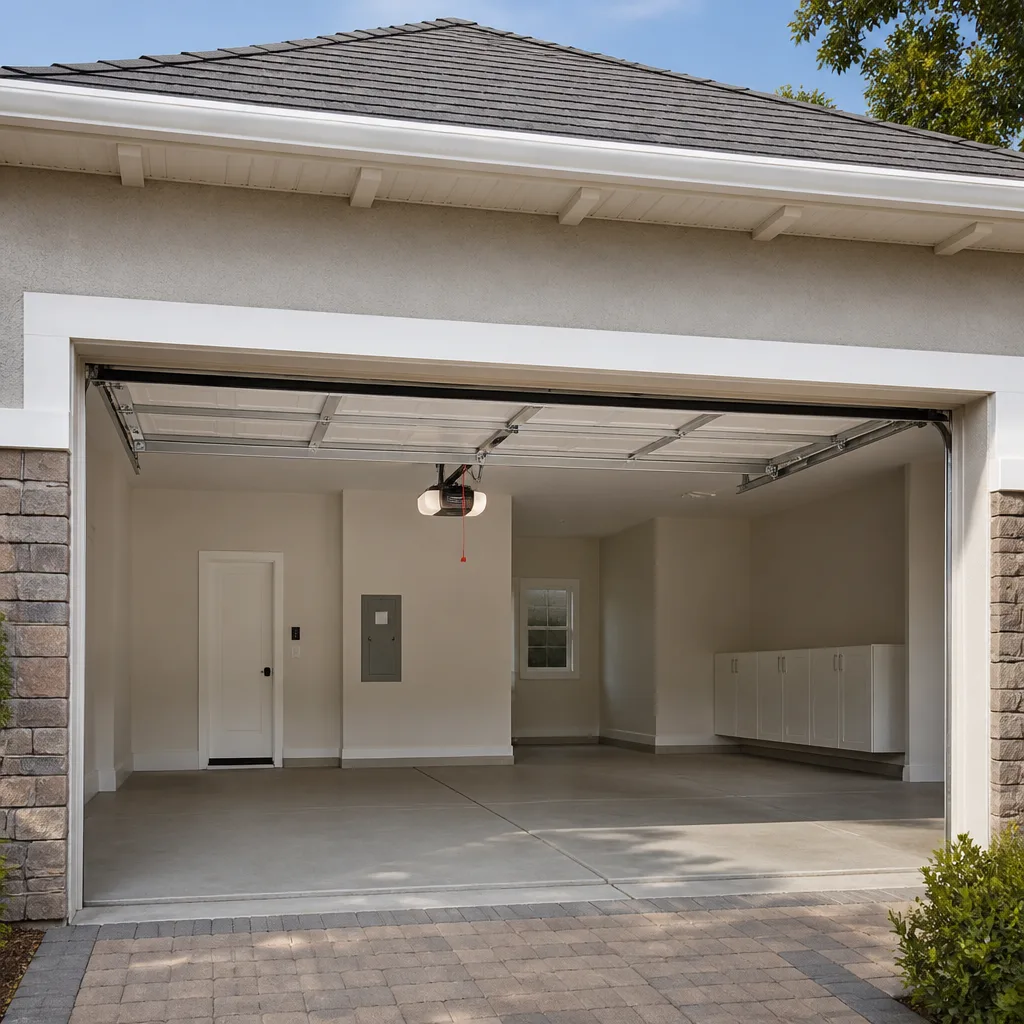 LiftMaster openers
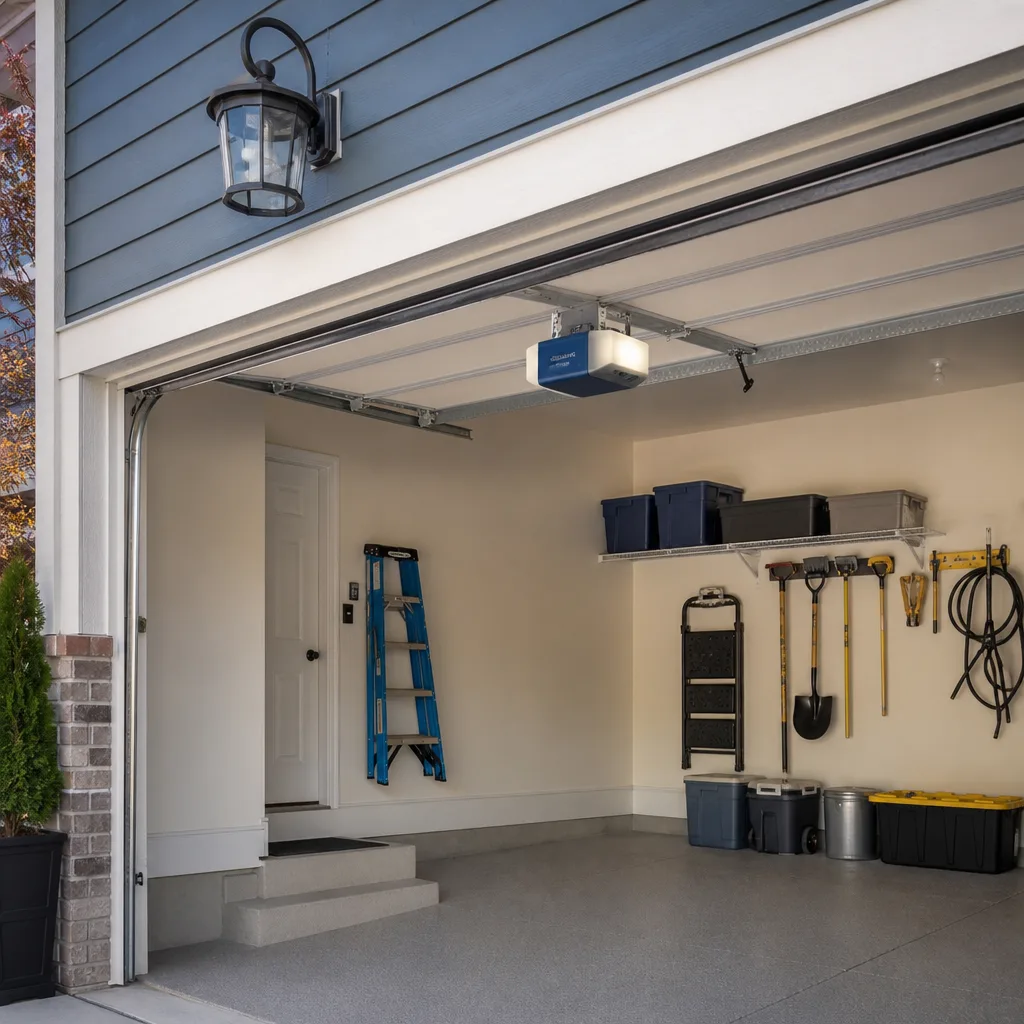 Chamberlain openers
Full 25-point door and opener safety check with every visit - springs, cables, rollers, tracks, and your LiftMaster or Chamberlain opener included
You get a price before we start. It does not change when the truck arrives.
Get your free estimateWayne Dalton Cable & Drum Replacement: The Atlanta Owner’s Guide
If your Wayne Dalton garage door has a snapped cable or a worn drum, we carry replacement cables and drums for most Wayne Dalton residential models and can typically complete the swap the same day we diagnose it. For Atlanta homeowners, Wayne Dalton cable replacement runs $130 – $250 installed, and drum replacement typically falls in the $150 – $280 range depending on your model and whether one or both sides need work. You’ll usually find out something’s wrong when the door hangs crooked, jerks on the way up, or one side refuses to lift at all.
Here’s the honest picture: Wayne Dalton uses a specific cable-and-drum setup on many of its doors, and the cable runs through a drum mounted on the torsion tube above the door. When that cable frays or snaps, the door loses tension on one side, and everything shifts out of alignment fast. The good news is that this is a repair we handle regularly across Atlanta, from Buckhead to Decatur to Sandy Springs, and we keep the cable lengths, drum profiles, and fittings to match Wayne Dalton’s series on hand.
Key Takeaways
- Cable replacement on a Wayne Dalton door in Atlanta: $130 – $250, parts and labor included
- Drum replacement adds $150 – $280, depending on model and whether it’s one side or both
- We stock Wayne Dalton-specific cable lengths and drum profiles on the service vans
- Written price before any work starts – the number we quote is the number you pay
- Every repair is covered by the 365-Day Done Right Promise in writing
Which Wayne Dalton Models This Applies To
Wayne Dalton builds three common residential door families in the Atlanta market, and each uses slightly different cable and drum hardware. The TorqueMaster system, found on many Wayne Dalton 8000 and 9000 series doors, uses a torsion spring housed inside a tube, with cables running through drums that sit on the outside of that tube. The ClassicDrive and ThermoMark lines generally use a conventional torsion bar setup with exposed springs and separate drums. The iDrive series, now discontinued but still present in plenty of Atlanta garages, has its own drum profile that doesn’t interchange with anything else.
The single most important identification step is reading the label on the side of the door. Wayne Dalton prints the model number there, and it tells us exactly which cable length and drum style your door was built with. If the label is missing or faded, we measure the drum diameter, count the cable wrap grooves, and check the cable thickness before we touch anything. That measurement step matters because Wayne Dalton changed cable diameters between model years on some series, and a cable that’s a 1/16th too thick won’t seat properly in the drum and will chew itself up in a few months.
One compatibility gotcha we see regularly in Atlanta: homeowners with a TorqueMaster door who try to fit a universal cable kit from a big-box store. Those universal kits are cut for conventional torsion systems, and they either bind inside the TorqueMaster housing or leave the cable riding against the drum edge. If you’re weighing OEM Wayne Dalton parts versus a quality aftermarket equivalent, the honest answer is that aftermarket cables made from the same 7×19 aircraft-grade steel work just fine, as long as they’re cut to the exact length and fitted with the correct loop and stop. The drums are a different story: Wayne Dalton drum profiles are specific enough that we’ll only fit a non-OEM drum if it’s measurably identical. Nine times out of ten, we install OEM drums to avoid a call-back.
Styles & brands we work with
Signs Your Wayne Dalton Cable & Drum Replacement Is Failing
- The door hangs crooked or one side sits lower than the other. This is the classic cable failure sign. One cable has either snapped or jumped off the drum, and the remaining cable is holding all the unbalanced weight.
- You hear a sharp snap from inside the garage, and then the door won’t open. That snap is almost always a cable giving way under tension. The door may still be partly balanced by the spring, but trying to open it now risks damage to the tracks and rollers.
- The door jerks or shudders as it travels. A frayed cable catches and releases inside the drum grooves as the drum turns, which makes the door hesitate partway through the cycle. Left alone, that frayed section will separate completely.
- You can see loose cable spooled unevenly on one drum while the other side looks smooth. Uneven spooling means the cable has lost tension on that side, usually because the drum set screw backed off or the drum’s grooves have worn smooth. The door is running on borrowed time.
- There’s a new grinding or scraping sound near the top corners when the door moves. That’s the cable riding on the edge of a worn drum, or a drum that’s shifted sideways on the torsion tube and is now scraping metal against metal.
See the difference
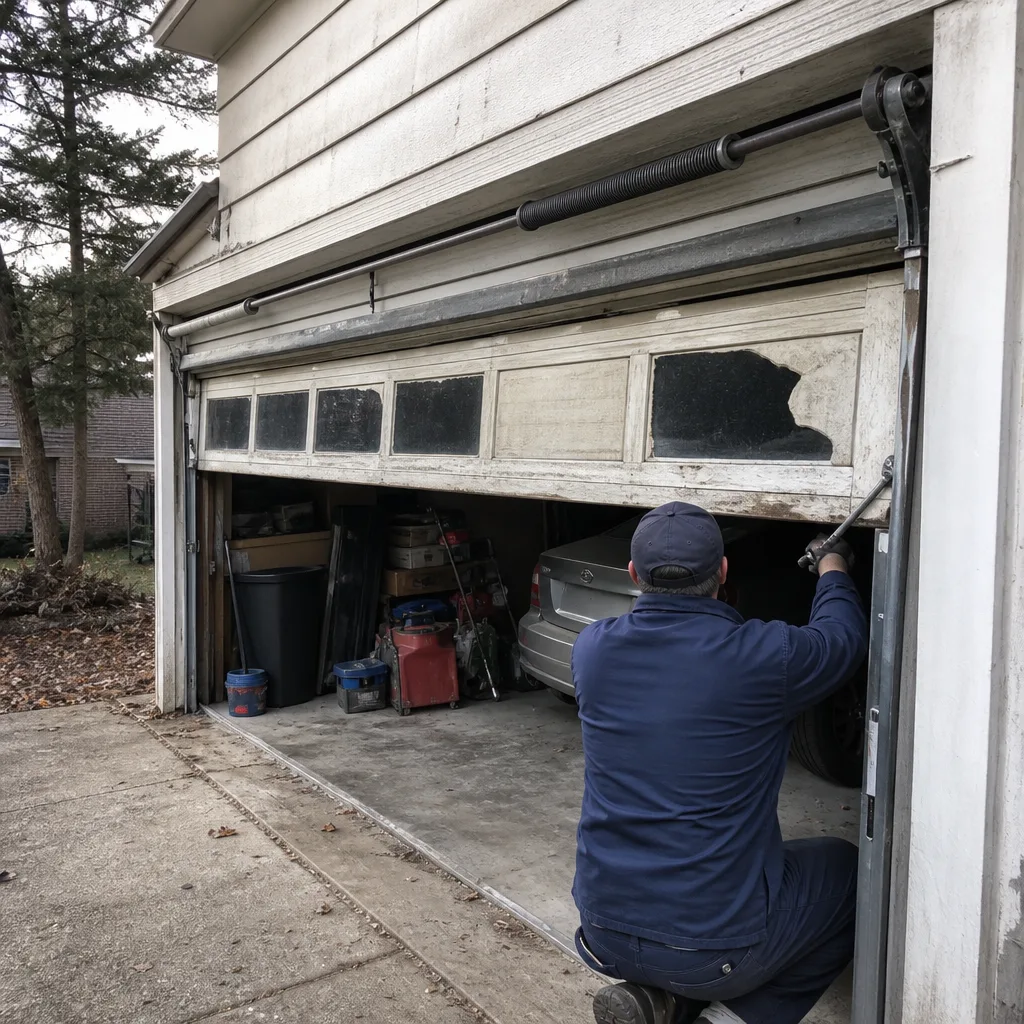 Before
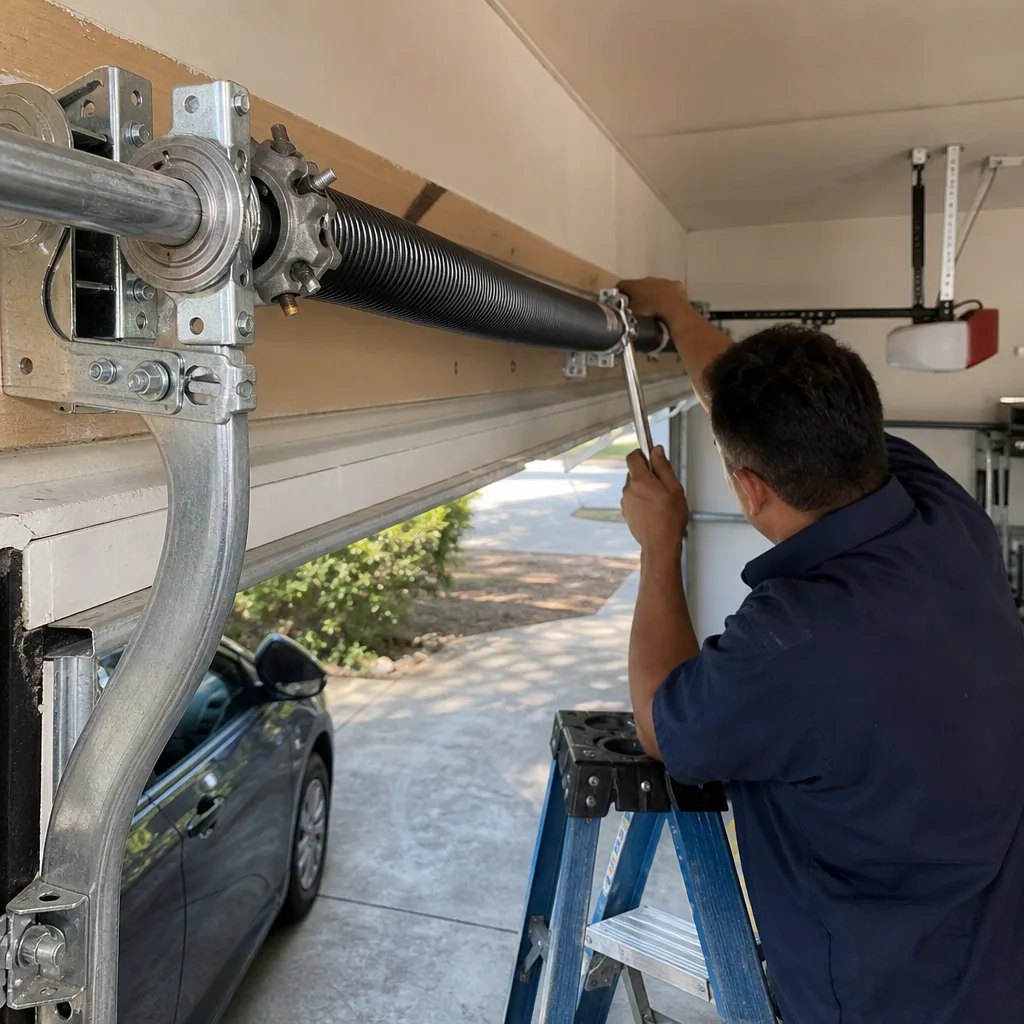 After
After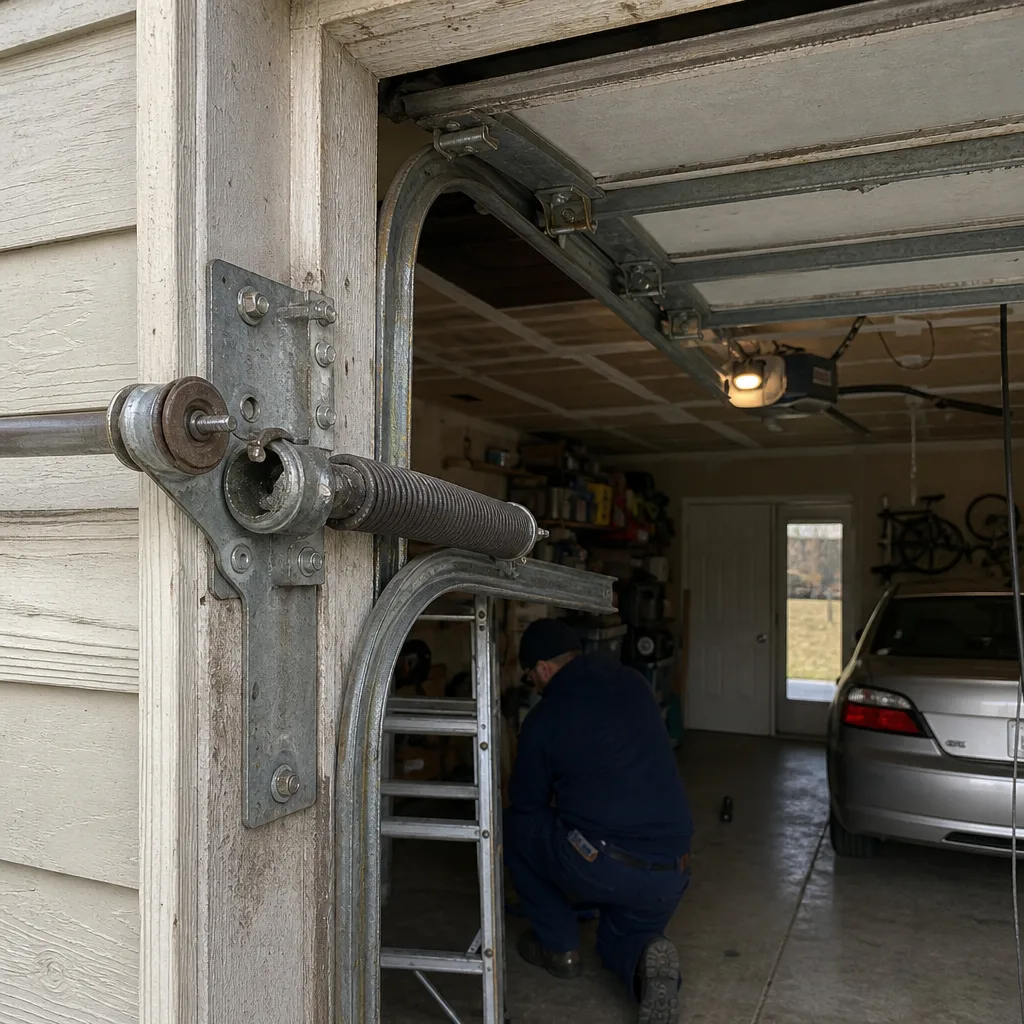 Before
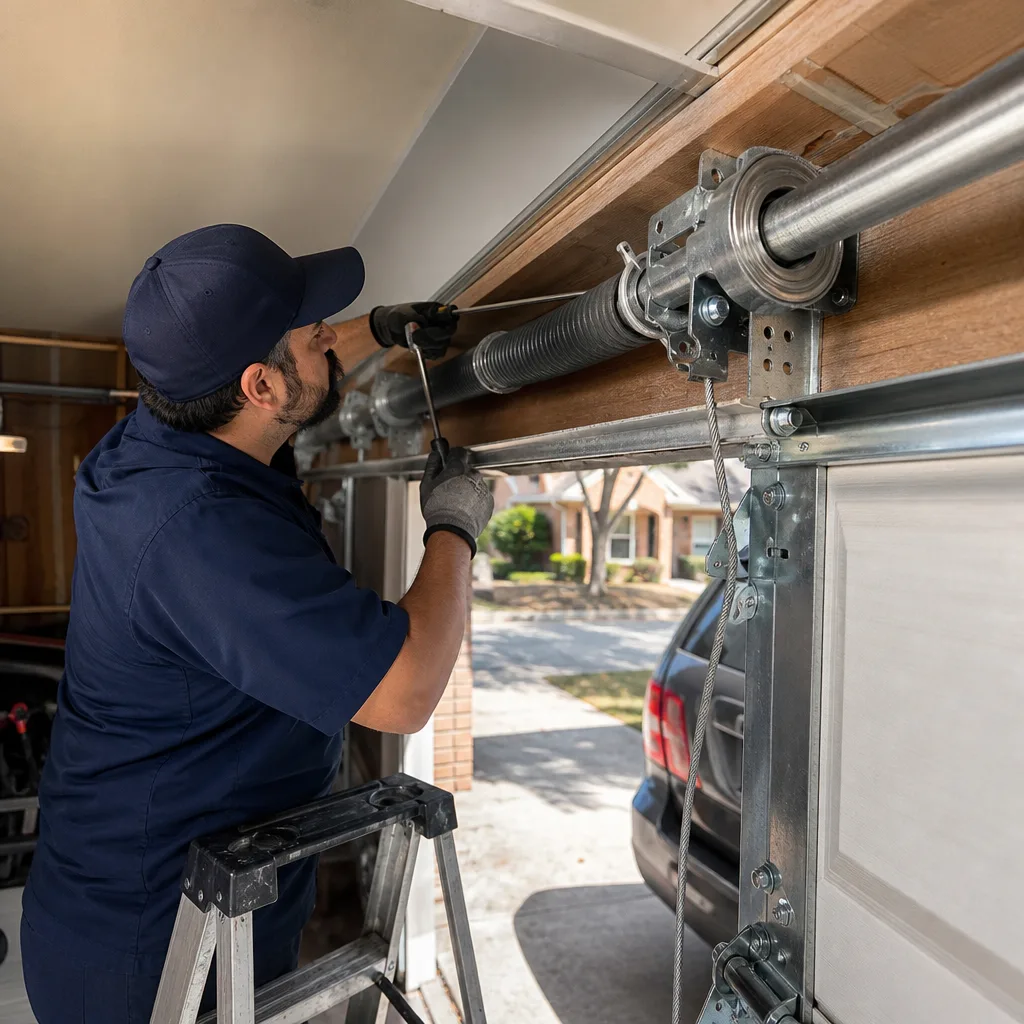 After
After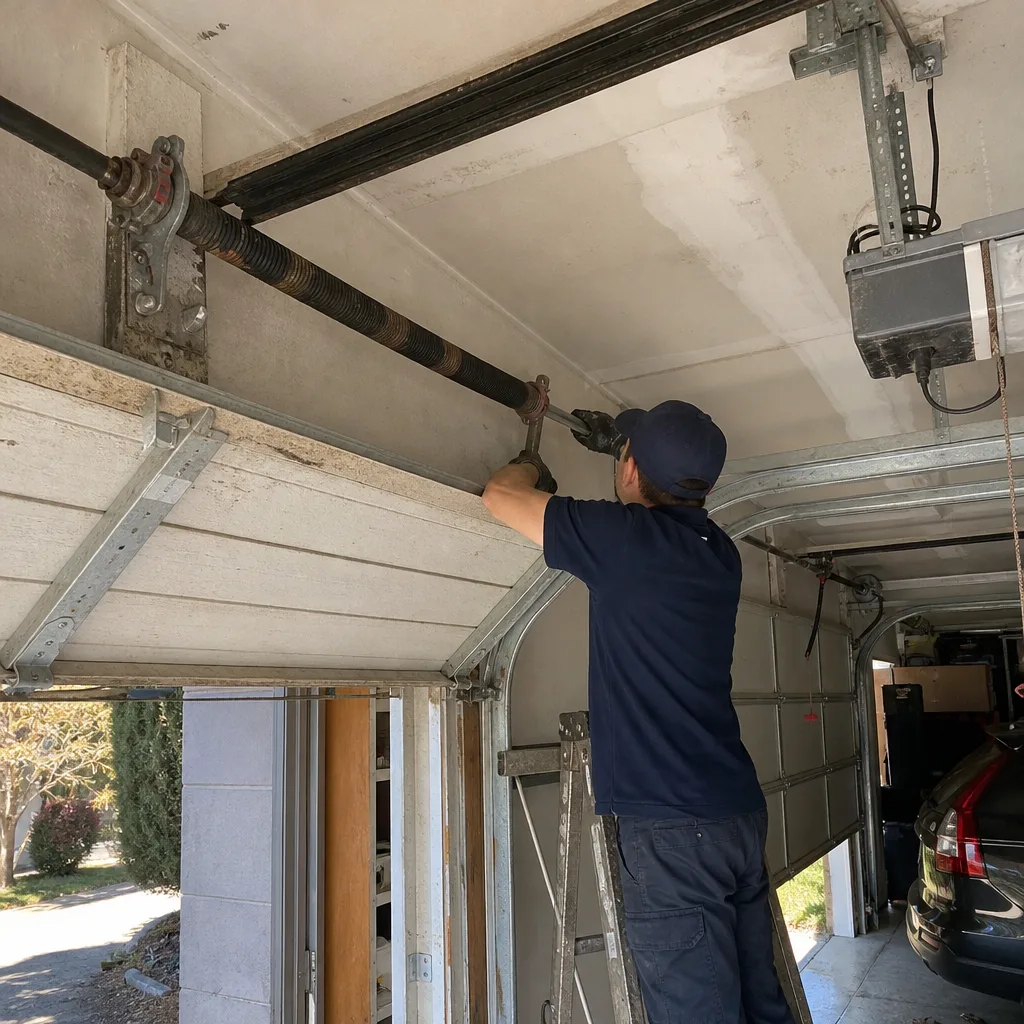 Before
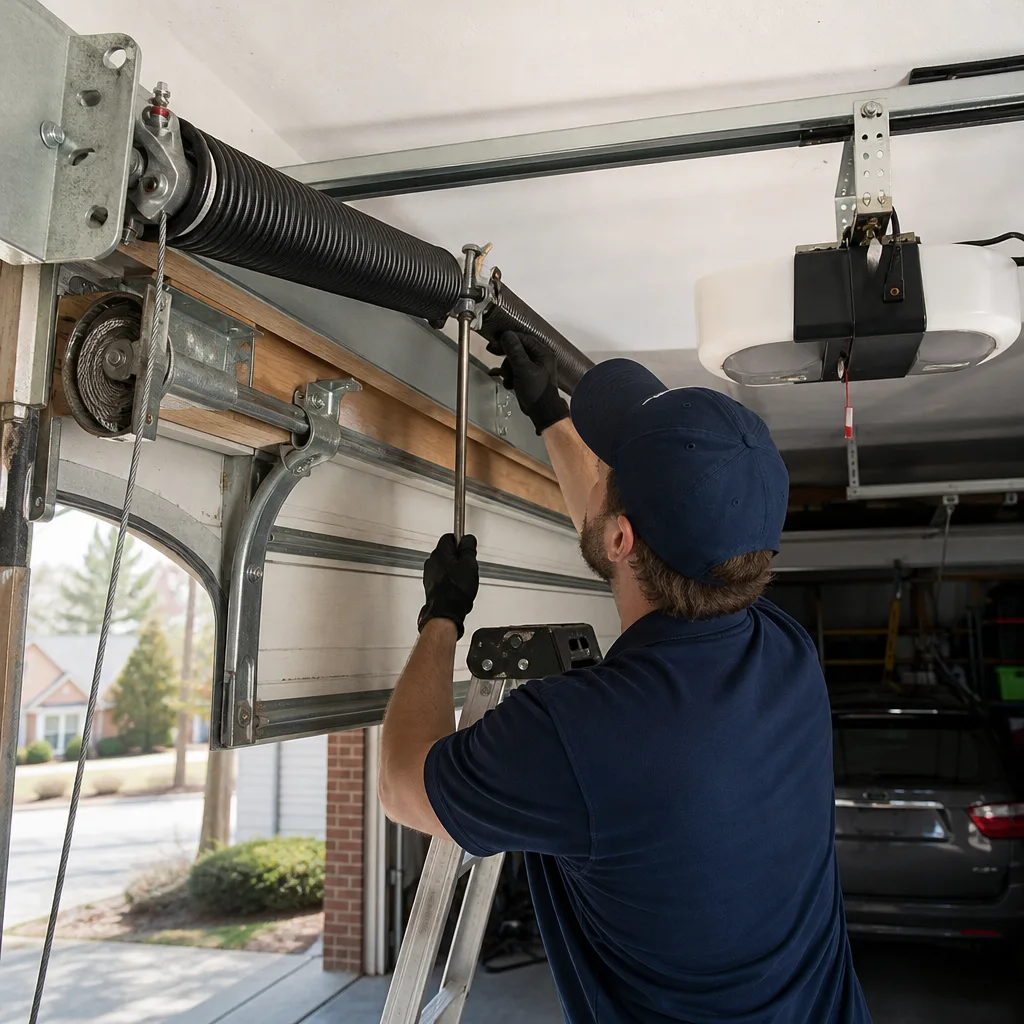 After
AfterReplacement Cost & What’s Included
In Atlanta, a Wayne Dalton cable replacement runs $130 – $250 for a single-side replacement. If both cables need to be replaced, which is what we usually recommend when one has snapped, the work typically lands in the $180 – $320 range. Drum replacement adds $150 – $280 per drum, depending on whether you have a TorqueMaster or a conventional torsion setup. If we’re already on site and the drum needs replacing alongside a cable, you’ll see one combined written price, not two separate surprise line items.
Here’s what that number includes, every time: the diagnostic work to identify why the cable failed (a cable rarely fails without an underlying cause), the replacement parts, the labor to fit them, and the time we spend testing the door through a full open-and-close cycle before we leave. It also includes the written guarantee, which spells out exactly what’s covered and for how long. The 365-Day Done Right Promise means that if the repair fails inside a year, we come back and fix it at no charge. That’s in writing, not a verbal promise at the door.
What drives the price range on this specific repair is mostly the drum condition. If the drum is still true and the grooves are clean, cable replacement is straightforward and fast. If the drum is worn, cracked, or has a groove wall broken away, that part has to be replaced too, or the new cable will fail the same way the old one did. That’s a call we make honestly and explain before any work starts, which is the whole point of the Kingswell Way: say the price before the work, show up in the window, leave the place cleaner than we found it, put the guarantee in writing, and come back if it fails.
DIY or Call Us?
Let’s be plain about this: the cables on a Wayne Dalton door are under full torsion spring tension. If the spring has any stored energy, and it almost always does, a cable that slips while you’re working on it can release that energy through the drum, the winding mechanism, or the cable itself. That’s a serious injury risk. Marcus Ellery, our owner and lead technician, tells his Atlanta customers the same thing he’d tell his own neighbors: this is not a job for a YouTube afternoon. He trained at Los Angeles Trade-Technical College and has been working on torsion systems for two decades, and he still treats every stored-spring job with caution.
What you can safely check yourself: look at the cables while the door is fully closed and see if one is visibly loose, frayed, or has jumped off the drum. Look for scoring or a rounded-over groove on the drum’s outer edge. Take a photo of the label on the side of the door so you can relay the model number when you call. And then stop. Do not attempt to re-seat a cable or loosen any bolts on the drums or end bearing plates. The service call is a lot cheaper than the emergency room, and infinitely cheaper than a new door after a partial disassembly goes wrong.
Call (229) 792-2327 and we’ll get a background-checked, uniformed technician out to diagnose it and put a written price in your hand before any work starts. Marcus likes to say: “Tell me what it’s doing, and I’ll tell you what it needs – no guesswork, no extras.”
FAQs
In the Atlanta climate, you can expect Wayne Dalton cables to last 8 to 12 years and drums to last 15 to 20 years before wear becomes a problem. Georgia humidity accelerates cable corrosion, especially in garages that aren’t climate-controlled, which is why we see more cable failures in Buckhead and the older intown neighborhoods than in drier parts of the city. Drums fail slower, but once the grooves wear smooth or the set screws back out, the cable will jump and the failure cascade begins. Call (229) 792-2327 if you’re seeing any of the signs above, and we’ll quote you a written price before any work starts.
No, a snapped cable cannot be spliced or repaired safely. Cables are always replaced, never patched. A cable’s strength comes from its continuous, unbroken winding, and any splice introduces a weak point that will fail under load. The good news is that we carry replacement cables for Wayne Dalton doors on the van, so the swap is typically completed in a single visit. Call (229) 792-2327 for a free estimate and a written price.
A straightforward single-cable replacement takes about 45 to 60 minutes from diagnosis to final test. If both cables need replacing, plan for 90 minutes to 2 hours. If the drum also needs replacing, you’re looking at 2 to 3 hours, since we need to de-tension the spring, remove the old drum, fit the new one, re-tension, and test the full cycle. We quote the price before we start, so the labor time never turns into a surprise up-charge. Call (229) 792-2327 to schedule.
Yes, we stock the common Wayne Dalton cable lengths, fittings, and drum profiles on our Atlanta service vans, including TorqueMaster and conventional torsion setups. We also stock cables and components for LiftMaster, Chamberlain, and Genie opener systems if you need related work done at the same visit. If you have an uncommon iDrive drum or a discontinued series, we may need to bring the specific part on a follow-up visit, but we’ll tell you that before we schedule so you’re never surprised. Call (229) 792-2327 and we’ll check what your model needs right away.
Bramwell Garage Doors Atlanta is an independent service provider and is not affiliated with Wayne Dalton. All replacement parts are sourced to match your door’s original specifications.
If your Wayne Dalton door has a cable or drum that’s failing, don’t wait for the door to come down off the tracks. Call (229) 792-2327 now for a free estimate and a written price – a live person answers 24 hours a day, 7 days a week, including nights, weekends, and holidays.
Written by Marcus Ellery, Owner & Lead Technician, Bramwell Garage Doors Atlanta at Bramwell Garage Doors Atlanta, serving Atlanta and nearby areas.