
Last updated October 16, 2026
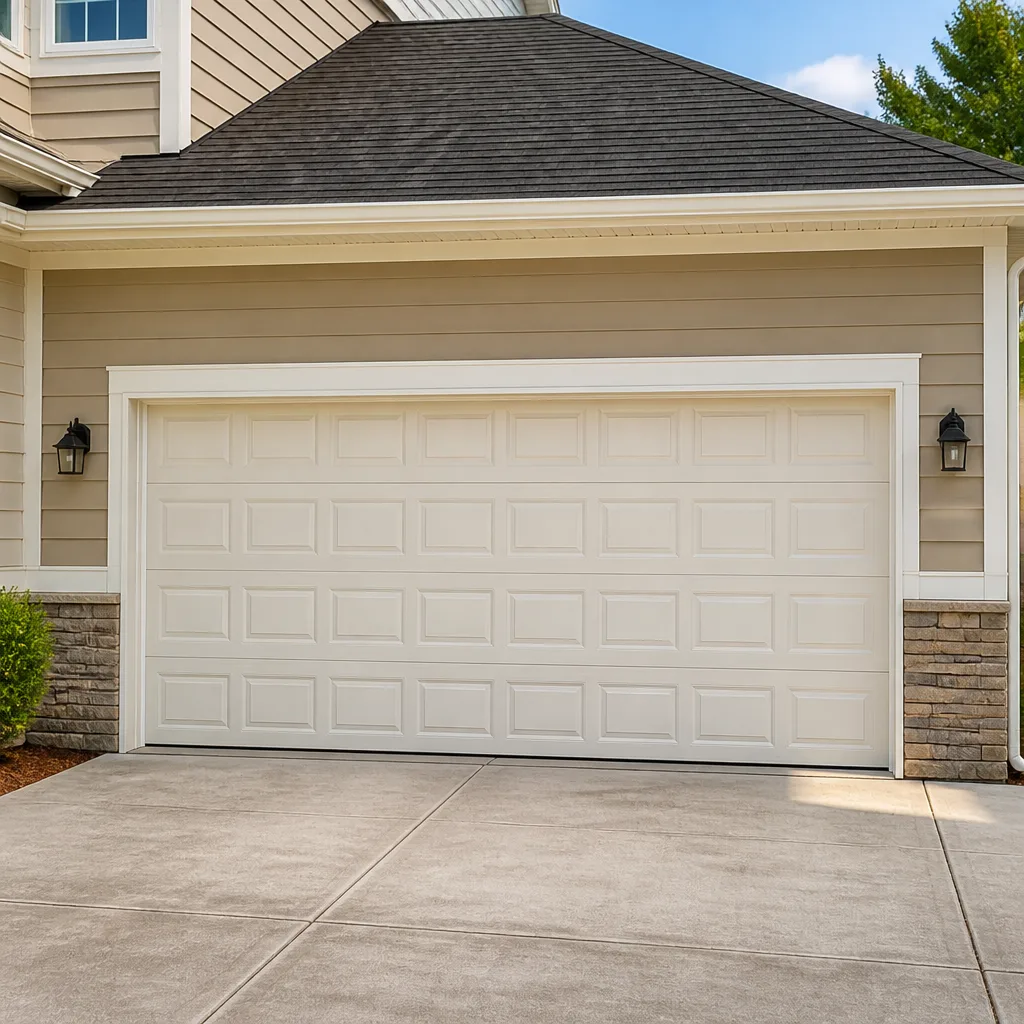 Raised-panel steel
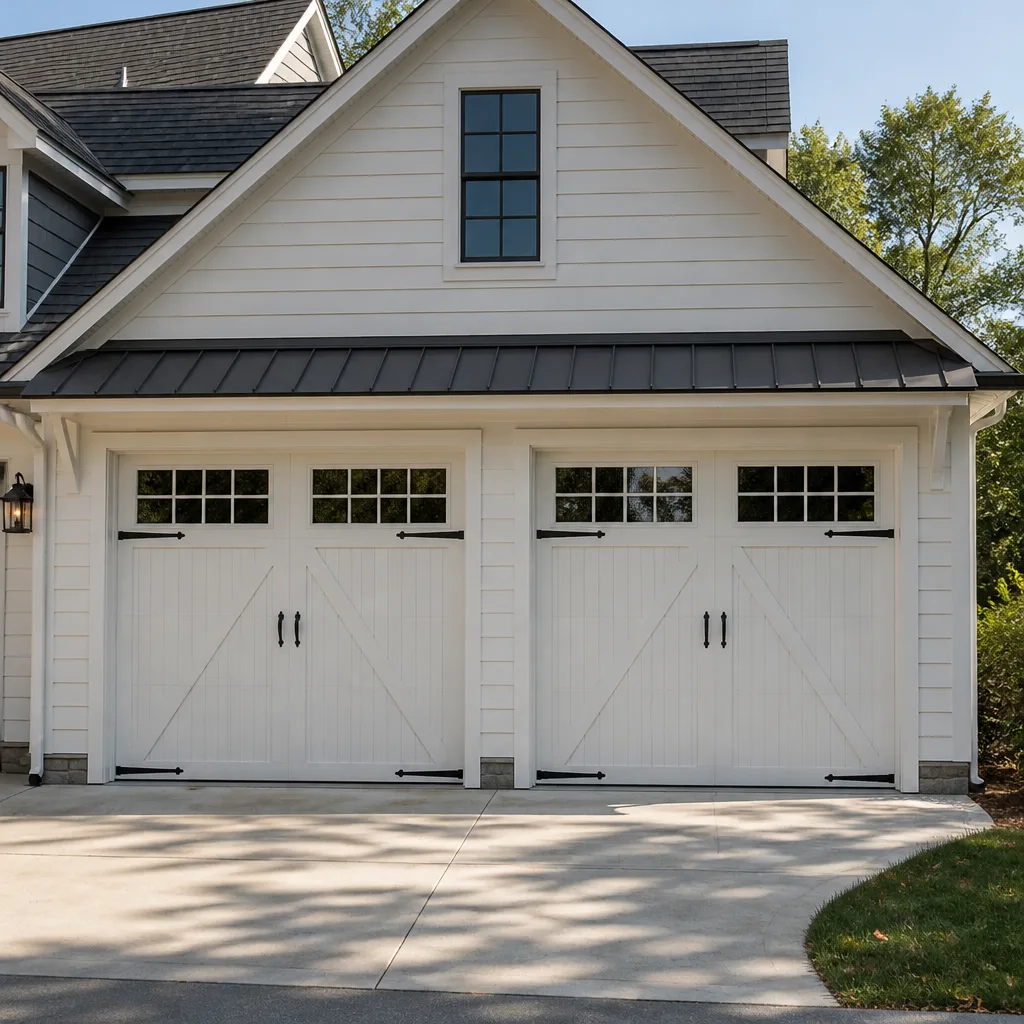 Carriage house
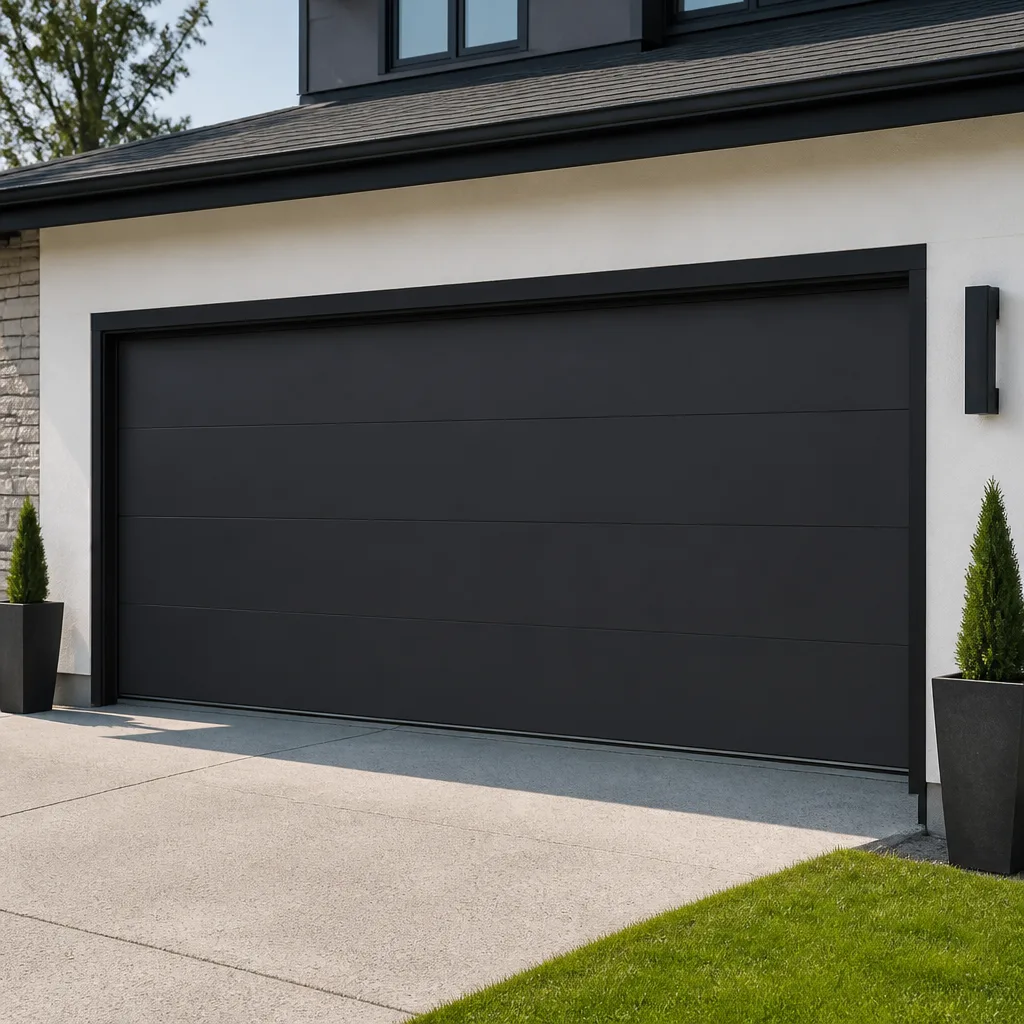 Modern flush
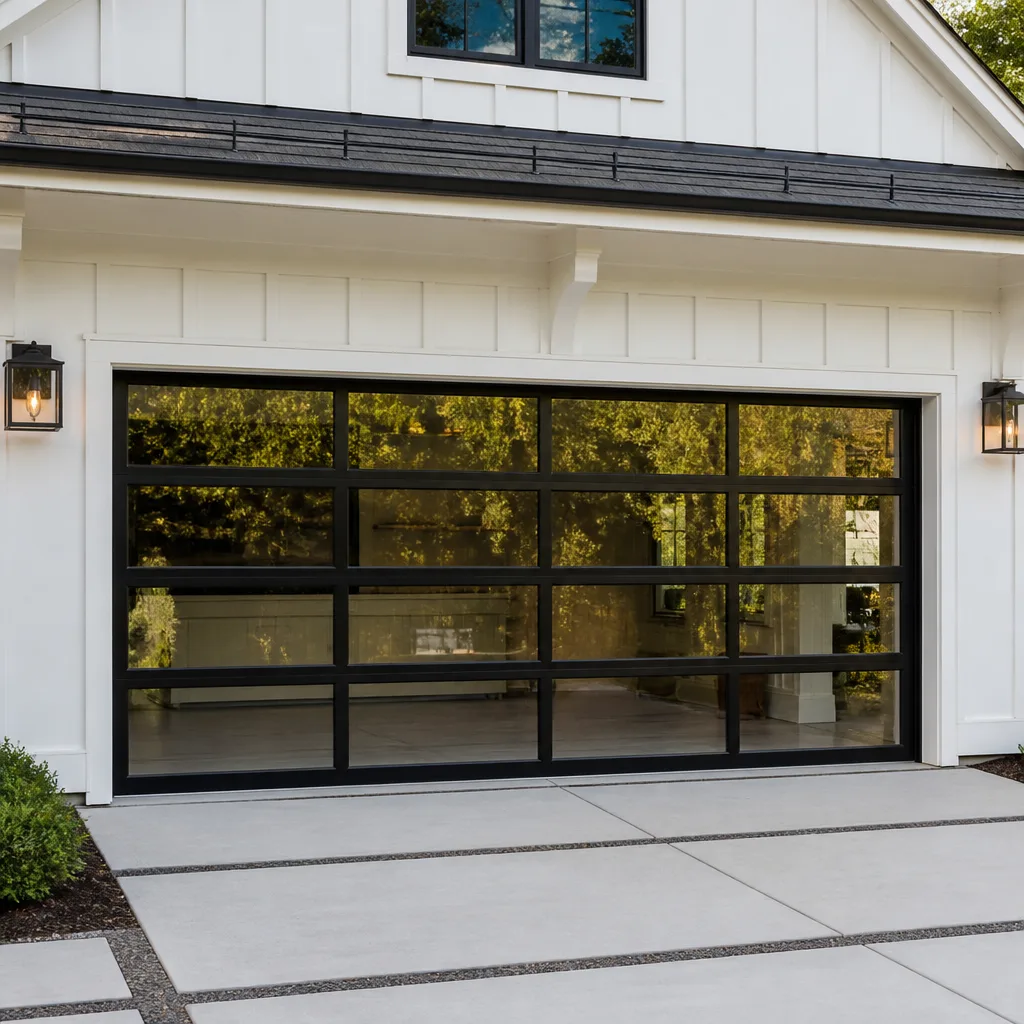 Full-view glass
 LiftMaster openers
 Chamberlain openers
Full 25-point door and opener safety check with every visit - springs, cables, rollers, tracks, and your LiftMaster or Chamberlain opener included
You get a price before we start. It does not change when the truck arrives.
Get your free estimateDIY vs Professional Garage Door: The Atlanta Homeowner’s Decision Guide
Every year, emergency rooms across metro Atlanta treat homeowners for garage door injuries that started with “I’ll just fix it myself this weekend.” The physics at play are brutal: a standard 16-foot torsion spring assembly stores roughly 500 pounds of lifting force, and when that spring lets go unexpectedly, it releases all of it in a fraction of a second. This guide isn’t here to scare you away from your own garage or to upsell you on services you don’t need. It’s here to draw the honest line between the five jobs a competent Atlanta homeowner can knock out on a Saturday morning and the two jobs that send experienced contractors to the ER every year. We’ll walk through exact costs, exact steps, and what fair professional pricing actually looks like in Atlanta.
Quick Answer
For most Atlanta homeowners, DIY is the right call for four specific maintenance tasks: lubricating rollers and hinges, replacing weather stripping, cleaning and realigning photo-eye sensors, and tightening loose hardware. You should call a professional for torsion spring replacement and cable replacement, full stop. Those two jobs carry documented risk of serious, permanent injury, and the professional cost in Atlanta ($150 to $350 for springs, $180 to $320 for cables) is less than the deductible on most health insurance plans.
Styles & brands we work with
Table of Contents
- What You Can Safely DIY: The Complete List
- The Hard Stop List: Jobs You Should Never DIY
- Real Cost Comparison: DIY vs Professional in Atlanta
- How to Describe Your Door’s Problem So You Won’t Get Oversold
- What a Fair Written Estimate Looks Like in Atlanta
- Atlanta-Specific Factors: Heat, Humidity, and Your Garage Door
- Common Mistakes to Avoid
- When to Call a Professional
What You Can Safely DIY: The Complete List
We’re going to start with the good news, because a lot of garage door maintenance is genuinely approachable. These five tasks require no special tools beyond what you already have in the garage, carry minimal injury risk, and can extend the life of your door by years in Atlanta’s climate. We’ll give you the exact steps for each one.
1. Lubricating Rollers and Hinges
A dry roller is a squeaky roller, and a squeaky roller is wearing down faster than it should. In Atlanta’s humid summers, condensation accelerates rust on metal components, so this isn’t a one-and-done job. Plan to lubricate every six months, ideally in April before the heat sets in and in October as cooler weather arrives.
How to do it right:
- Disconnect the opener by pulling the red emergency release cord. This puts the door in manual mode so you can move it by hand.
- Open the door halfway. You’ll be able to reach most rollers from a step ladder, not a full extension ladder.
- Use a white lithium grease or a garage-door-specific spray lubricant, not WD-40. WD-40 is a degreaser and solvent, not a lubricant, and it will strip the existing grease off.
- Apply lubricant to the roller bearings (the small wheels inside the roller), the hinge pivot points, and the torsion spring coils above the door.
- Wipe away excess with a rag so it doesn’t drip onto the door panels.
- Reconnect the opener and run the door through a full cycle to distribute the lubricant.
Time: 20 minutes. Cost: $8 to $15 for a can of lithium grease. Risk: minimal. The only caution is avoiding the torsion spring itself while lubricating, which we’ll cover in the hard stop section below.
2. Replacing Weather Stripping
Atlanta’s summer storms and winter temperature swings are hard on the rubber seals at the bottom and sides of your garage door. When weather stripping cracks or pulls away, you’ll feel drafts, see daylight along the edges, and potentially find water pooling on the garage floor after heavy rain. Water intrusion is a slow killer for whatever you store in the garage, and in neighborhoods like East Atlanta and Decatur, garages often double as storage, workshop, or exercise space.
How to replace the bottom seal:
- Measure the width of the bottom of the door. Most Atlanta homes have 8-foot or 9-foot wide single doors, or 16-foot double doors.
- Purchase a replacement seal that matches the existing track style. There are three common types: T-style, bead-style, and U-style that slides onto a retainer channel.
- Pull out the old seal. If it’s a slide-on style, it will pull right out with a pair of pliers. If it’s screwed or stapled, remove the fasteners.
- Slide the new seal into place, working from one side to the other. On colder days, leave the seal in the sun for 20 minutes first so it’s more flexible.
- Trim any excess length with tin snips or heavy scissors.
Time: 20 to 30 minutes. Cost: $15 to $40 depending on door width and seal quality. Risk: minimal. New weather stripping is one of the highest-return maintenance projects for Atlanta homeowners because the climate is so hard on rubber. The Bramwell Garage Doors Atlanta home process for any repair starts with a written price, but this is a job you can absolutely handle yourself.
3. Cleaning and Realigning Photo-Eye Sensors
Photo-eye sensors are the two small units mounted about six inches off the ground on either side of the door opening. They shoot an invisible beam across the doorway, and if anything breaks that beam while the door is closing, the opener reverses. These sensors get knocked out of alignment by lawn equipment, kids’ bikes, or a box dragged through the doorway, and when that happens, the door will refuse to close or will reverse immediately after hitting the floor.
Here’s the step-by-step:
- Check for a blinking light on either sensor. A blinking or off light means misalignment or obstruction.
- Wipe the sensor lens with a dry cloth. Dust, spider webs, and Atlanta’s spring pollen are common culprits.
- Check that the sensors point directly at each other. Loosen the wing nut on the bracket, adjust the angle, and retighten when the lights come back on.
- If the sensors are mounted to the door track rather than the wall, check whether the track itself is vibrating when the door moves. A loose track bracket can knock sensors out of alignment every time the door opens and closes.
Time: 10 to 15 minutes. Cost: $0 unless you need a replacement sensor, which runs $30 to $60. Risk: minimal. This is the most common “the door won’t close” fix, and it’s almost always a 10-minute job you can do yourself. If the sensors stay aligned but the door still reverses, you may have a limit switch problem, which brings us to the next task.
4. Tightening Loose Hardware
A garage door moves thousands of times per year. Every movement creates vibration, and vibration loosens bolts. In Atlanta’s older neighborhoods, homes built in the 1950s through 1980s often have original door track hardware that has been loosening for decades. If your door rattles when it opens or the track visibly wiggles, it’s time for a hardware check.
What to tighten:
- Track mounting brackets where they attach to the wall and ceiling.
- Hinge bolts where hinge plates attach to the door sections.
- Roller brackets where they mount to the door.
- Opener rail bolts where the rail attaches to the opener unit.
Use a socket wrench and make every bolt snug, not cranked down. Overtightening can strip threads or bend brackets. You’re not torquing engine bolts here. The goal is to remove play, not to weld the door to the wall. If you find a cracked bracket or a bolt that won’t tighten because the hole has wallowed out, that’s a replacement job, and we’ll cover how to evaluate that in the professional section below. Tightening hardware is simple, but checking it periodically is important, because brackets under load can rip out of the wall if they’re allowed to flap around long enough. If you need a deeper look at your door system, start with Garage Door Repair in Atlanta.
5. Cleaning Your Door and Checking Balance
This one is part maintenance, part diagnostic. A garage door that’s out of balance puts extra strain on the springs and opener, and in Atlanta’s heat, that strain accelerates failure. The check takes two minutes and no tools.
How to check balance:
- Pull the red emergency release cord to disconnect the opener.
- Lift the door manually to about waist height.
- Let go. A properly balanced door stays where you put it. A door that drops to the floor means the springs are weakening. A door that shoots upward means springs are oversized or the door is too light.
Time: 5 minutes. Cost: $0. Risk: low, but there’s a catch: if your door fails this test, don’t adjust the springs yourself. Spring tension adjustment is on the hard stop list. A door that drops means spring replacement is coming, and that’s the most common Garage Door Spring Repair in Atlanta request we see.
The Hard Stop List: Jobs You Should Never DIY
There are two garage door tasks where the injury risk is documented, severe, and real, and no amount of YouTube watching changes the physics. We’re going to explain exactly why these jobs are dangerous, so that when you talk to any technician, you can evaluate whether their safety approach matches what you now know.
Torsion Spring Replacement and Adjustment
Here’s the plain explanation of how a torsion spring works. A torsion spring is the heavy coil mounted on a metal bar above the center of the door opening. It doesn’t stretch like an old screen-door spring. It twists. When you close the door, the spring winds tighter. When you open it, the spring unwinds. This twisting action is what makes a 150-pound door feel light enough to lift with one hand. A single torsion spring typically holds 10,000 to 15,000 cycles of lifespan, but in practice, Atlanta homeowners get 7 to 12 years from the springs that came with the house.
Here’s the danger. When a torsion spring breaks, it releases all of its stored energy instantly. If you happen to be near it when that happens, the spring can lash out with enough force to break bones. But the bigger risk isn’t the spontaneous break. It’s what happens when an untrained person tries to replace or adjust one. The job requires winding the new spring under tension using metal winding bars inserted into the winding cone. If one of those bars slips while the spring is partially wound, the spring unwinds violently, the bar becomes a projectile, and your hand, wrist, or face is in the path. The standard injury is a broken wrist, forearm, or hand, and more severe injuries are documented.
Our technicians wind springs with two hardened steel winding bars, standing to the side, never with their head or torso in the plane of the bar’s arc. They use the correct bar diameter for the cone size. They never substitute a screwdriver, pry bar, or any improvisation. In our experience in metro Atlanta, every single “I tried to fix the spring myself” story we hear from customers ends one of three ways: the person gave up halfway through and called us, the person finished the job but the door was out of balance, or the person ended up at Urgent Care. The second outcome is almost worse than calling us first, because the cost to fix an improperly wound spring is the same as replacing it correctly in the first place.
Most torsion spring replacements in Atlanta run $150 to $280, parts and labor included, depending on spring size and whether you’re replacing one or both springs. Most residential doors have two springs, and when one breaks, the other is usually close behind. Replacing both at once is standard practice and avoids a second service call fee a few months later.
Cable Replacement
The cables are the thin steel wires that run alongside the door on both sides. They attach to the bottom of the door and wrap around drums at the top. When the springs do their lifting, the cables transfer that lifting force to the door. Cables are under high tension whenever the door is in the up position. When a cable breaks, the door becomes severely unbalanced and may jam in the track, drop to one side, or bind at an angle.
Here’s what most guides don’t tell you. The cable itself may seem like “just a wire,” but the danger is really in the tension combined with the small parts. Cables attach to the door’s bottom brackets, which themselves are under spring tension. When a novice removes a cable without releasing the tension on the associated spring, the bracket can snap back like a mousetrap, and that bracket is attached to a door that weighs 100-plus pounds. The other danger is cutting a cable under tension. The cable stores enough energy to slice through gloves and skin if it whips free.
Professional cable replacement typically costs $180 to $320 in Atlanta, including the cable pair and any necessary drum adjustment. This is not a “let me watch one video and try it” situation. If your cable has visible fraying, rust, or has snapped, call a professional. Replacing the cables requires releasing the spring tension, which brings us right back to the torsion spring danger.
Track Realignment Beyond a Minor Adjustment
The tracks are the channels that door rollers ride in, running from floor level on both sides and curving back horizontally into the garage. If your door is grinding, jerking, or coming off the track, you may attempt a gentle, minor track adjustment limited to loosening the mounting bracket, nudging the track a fraction of an inch, and retightening. If the track is visibly bent, badly misaligned, or the door has popped a roller out, stop. The door is under significant lateral force in this state, and a door that comes off its track in mid-operation can fall with enough force to cause serious injury or property damage. Track replacement or significant realignment is a professional job, and in Atlanta, it runs $150 to $250 for a single-track repair or replacement.
Real Cost Comparison: DIY vs Professional in Atlanta
Now let’s lay out the actual numbers. DIY cost looks cheap on the surface, but the hidden costs are real, and we’ve seen every one of them play out in neighborhoods across Atlanta.
Lubrication and Basic Maintenance
- DIY cost: $8 to $15 for lithium grease, 20 minutes of time. Total: under $20.
- Professional cost: $75 to $125 for a maintenance call, which includes full lubrication plus a 20-point safety inspection.
- Verdict: DIY. This is the easiest money you’ll save all year.
Photo-Eye Sensor Cleaning and Alignment
- DIY cost: $0 to $10 if you need a cleaning cloth, 15 minutes of time.
- Professional cost: $75 to $125 for a service call that includes sensor cleaning, alignment verification, and testing.
- Verdict: DIY first. If it doesn’t fix the problem, you’ve spent 15 minutes and learned something. The professional becomes the right call if the sensor itself has failed.
Weather Stripping Replacement
- DIY cost: $15 to $40 for the seal, 30 minutes of time, no trip to the emergency room.
- Professional cost: $100 to $180 depending on door width and seal type, including removal and disposal of old stripping.
- Verdict: DIY. It’s a low-risk, high-frustration-tolerance job because the seal can be stubborn to slide into place, but the cost savings are real.
Torsion Spring Replacement
- DIY cost: $40 to $80 for a pair of springs online, plus $25 to $40 for the winding bars, plus 2 to 4 hours of your time, plus a significant probability that something goes wrong.
- Hidden cost 1: The springs you bought online may be the wrong size, wrong wire gauge, or wrong wind direction. A wrong spring means the door is out of balance, which causes premature wear and injury risk. Now you’ve spent $100 on wrong parts and still haven’t solved the problem.
- Hidden cost 2: Emergency department co-pay for a wrist injury in a typical Atlanta health plan: $100 to $400, before any imaging or follow-up. And that’s if the injury is relatively minor.
- Professional cost in Atlanta: $150 to $280 for most torsion spring replacements, parts and labor included. The job takes 30 to 45 minutes with the right tools and trained hands.
- Verdict: Call a professional. Full stop. The math doesn’t even require a risk calculation: you can gamble $120 plus your hand on DIY, or you can pay $150 to $280 and have it done correctly. When someone says “I’ll just replace the spring myself to save $100,” what they’re really saying is, “I’ll risk permanent injury to save $100.” That’s a bad trade.
Cable Replacement
- DIY cost: $25 to $50 for a pair of cables, plus 1 to 3 hours of your time, plus the fact that you’re touching a system under spring tension.
- Hidden cost: If the cable snaps while you’re working and the door drops, the damage to the door panels, track, and possibly your car or your body can run into the thousands.
- Professional cost in Atlanta: $180 to $320, including both cables and any necessary drum adjustment.
- Verdict: Call a professional. The risk of DIY cable work is serious and the professional cost is reasonable.
The pattern here is consistent: the safe DIY tasks save you $75 to $130 each. The dangerous tasks carry professional costs of $150 to $320, which is less than most people assume, especially when the alternative includes weeks in a cast or worse.
How to Describe Your Door’s Problem So You Won’t Get Oversold
One of the most useful skills an Atlanta homeowner can develop is the ability to describe a garage door problem in precise, specific terms. The more clearly you can describe what’s happening, the harder it is for any service company to talk you into work you don’t need. Here’s what to notice and how to say it.
Listen for the Noise
Different noises point to different problems. Describe the sound exactly as you’d describe it to a mechanic:
- Loud bang, like a firecracker, from above the door: This is almost always a spring snapping. Expect a spring replacement.
- Squeaking or squealing while the door moves: This is nearly always dry rollers or hinges. Lubrication fixes it.
- Grinding or metal-on-metal scraping: This often means a roller is binding or the door has shifted in the track. More serious than squeaking, but not necessarily expensive.
- Rattling at the top of the door near the opener: This is usually the opener’s trolley or the rail bolts loosening.
- Whining from the opener motor but the door doesn’t move: This is usually a broken opener gear, common in Atlanta with older chain-drive openers, especially in hotter weather.
Watch for Visual Symptoms
- Door is crooked when opening or closing: Cable problem or broken spring.
- Door opens an inch or two, then stops, and the opener light blinks: Photo-eye sensor obstruction or misalignment.
- Door closes then immediately reverses and opens again: Photo-eye sensor or limit switch issue.
- Gap between door and floor on one side when closed: Door is out of balance or one of the cables is failing.
- Door moves slowly, then stops partway: Opener force setting, binding rollers, or failing opener motor.
Never Describe the Problem as “Broken”
Saying “my garage door is broken” tells a technician nothing and invites a broad diagnosis. Instead, say: “The door opens fine but squeals loudly. I think the hinges are dry because the noise is exactly at the fold points.” That specificity signals you’ve been paying attention, and it narrows the technician’s diagnostic focus. It also makes it much harder to be sold unnecessary work. Every one of our technicians at Bramwell Garage Doors shows up with the expectation that you’ll be able to describe exactly what’s happening, and they’ll explain what they find in the same plain language before you’re asked to approve any work.
For more on what to expect from a full service call, see Garage Door Repair in Atlanta.
What a Fair Written Estimate Looks Like in Atlanta
Before the technician arrives, you should know what fair pricing for the most common professional garage door jobs looks like in the Atlanta metro. We publish these ranges because we believe the more you know before you call, the better the experience will be, whether you hire us or not. The Kingswell standard has always been this: the technician presents a written price before any work begins, and the price on the invoice matches the number you heard.
Here’s a fair estimate for the most common professional jobs in Atlanta:
- Torsion spring replacement (both springs): $150 to $280. This includes the springs, all balance adjustments, and a full safety check of the entire door system.
- Single spring replacement: $90 to $180. We’ll typically recommend replacing both springs if your door has them, since the second one is likely close behind and replacing it at the same time avoids a second service charge.
- Cable replacement (pair): $180 to $320. This includes both cables, drum inspection, and door rebalancing.
- Track replacement or significant realignment (single track): $150 to $250.
- Opener repair (gear replacement, circuit board, or limit switch): $120 to $250, depending on part and opener model. If the opener is 15 to 20 years old, we may recommend replacement instead, and we’ll show you the numbers side by side.
- Full maintenance call (lubrication plus 20-point inspection): $75 to $125.
A fair written estimate will always be specific. It will name the part, the price of the part, the labor, and the total. It will not be a round “it’ll probably be around $400.” It will also state what the guarantee covers and for how long. The 365-Day Done Right Promise means if the repair fails within a year, we come back and fix it at no charge – that commitment is in writing. If the technician can’t tell you what the guarantee covers, that’s a signal to keep looking.
When comparing Garage Door Installation in Atlanta quotes, the same principle applies: a written price, named components, an arrival window, and a written guarantee. Not a verbal promise.
Atlanta-Specific Factors: Heat, Humidity, and Your Garage Door
Atlanta’s climate works against your garage door in two specific ways, and understanding them helps you schedule the right maintenance at the right time.
Humidity and Rust
Metro Atlanta averages 50 to 60 inches of rain annually, and the relative humidity in the summer months routinely exceeds 70 percent. That moisture accelerates rust on every metal surface in your garage door system: springs, cables, hinges, brackets, and track hardware. Rust weakens metal and shortens the life of springs and cables specifically. In neighborhoods like Buckhead and Sandy Springs with mature tree canopies, garages stay shaded and damp for longer, which concentrates the effect. Our technicians see more rusted cables and corroded hardware in heavily treed neighborhoods than in newer developments with open sun exposure.
The practical takeaway: inspect your springs and cables for rust every spring. If you see surface rust on springs, it’s not an emergency, but the spring’s remaining lifespan is shrinking. If you see rust on cables, especially near the bottom bracket where they attach to the door, that’s a replacement situation. Cable rust weakens the individual steel strands, and a frayed cable can snap with no warning.
Heat and Expanding Metal
Atlanta summers regularly push into the 90s, and uninsulated garages soak up that heat. Metal expands when it’s hot, and that expansion affects garage door hardware. The most common heat-related symptom is a door that binds or sticks during the hottest part of the afternoon but operates fine in the morning. That’s usually a track alignment or roller issue that’s marginal enough to only manifest when the metal expands. If you notice this pattern, note the exact time of day and the outside temperature when it happens, because that information helps a technician pinpoint the cause faster.
Heat also shortens the life of opener motors, especially older units mounted in uninsulated garages. The motor generates heat as it runs, and when the garage is already 110 degrees inside, that motor is working harder and hotter. If your opener is 10 to 15 years old and you notice it slowing down or whining louder in the summer, that’s the heat doing its work.
Common Mistakes to Avoid
- Attempting spring work with improvised tools. We’ve seen screwdrivers, rebar, and pry bars used as winding bars. Each one is a broken-wrist story waiting to happen. Real winding bars are hardened steel, cost $25 to $40, and are sized to fit the winding cone. Do not improvise.
- Replacing only one spring when both are the same age. When one torsion spring breaks, the other is typically near the end of its life. Replacing only the broken one saves $40 to $90 in parts but sets up a second service call and a second labor charge within months. Replace both.
- Using WD-40 as a garage-door lubricant. WD-40’s name literally stands for “water displacement.” It’s designed to clean and degrease, not to lubricate. Use lithium grease or a dedicated garage-door lubricant.
- Ignoring a slow or jerky door. If your door has been operating more slowly or jerking for weeks, that’s not normal wear. It’s a component failing. The longer it goes unaddressed, the more likely a more expensive failure becomes.
- Adjusting the opener’s force settings to “fix” a door that’s binding. If a door is binding and you crank up the opener force to compensate, you remove the safety mechanism that prevents the door from closing on a person or object. The fix is addressing the binding, not overriding the safety.
- Working on a door that’s still connected to the opener. Before you do any DIY work on your door, pull the red emergency release cord and disconnect the opener. A door that gets activated by a stray remote signal while your hands are on it is a dangerous surprise.
- “Letting it ride” until the door stops working entirely. This is the most expensive mistake we see in Atlanta. A door that’s making noise, binding, or shuddering is telling you something. Waiting until it fails completely transforms a $150 spring replacement into a $800-plus job that includes a new door panel, bent track, or a burnt-out opener.
When to Call a Professional
Call a professional if any of these apply: your door has a broken or visible rusted torsion spring, your cables are frayed or snapped, your door has come off its track, your door drops when disconnected from the opener (indicating spring failure), or your garage door is more than 25 years old and has never had a full safety inspection. Also call if you’ve attempted a DIY fix and the problem persists – we see this often enough to know the frustration, and we’re happy to finish what you started. Bramwell Garage Doors Atlanta offers free estimates in Atlanta – call (229) 792-2327 and a real person answers, 24 hours a day, 7 days a week. You’ll get a written price before any work begins, and the number on the invoice will match the number you heard.
See the difference
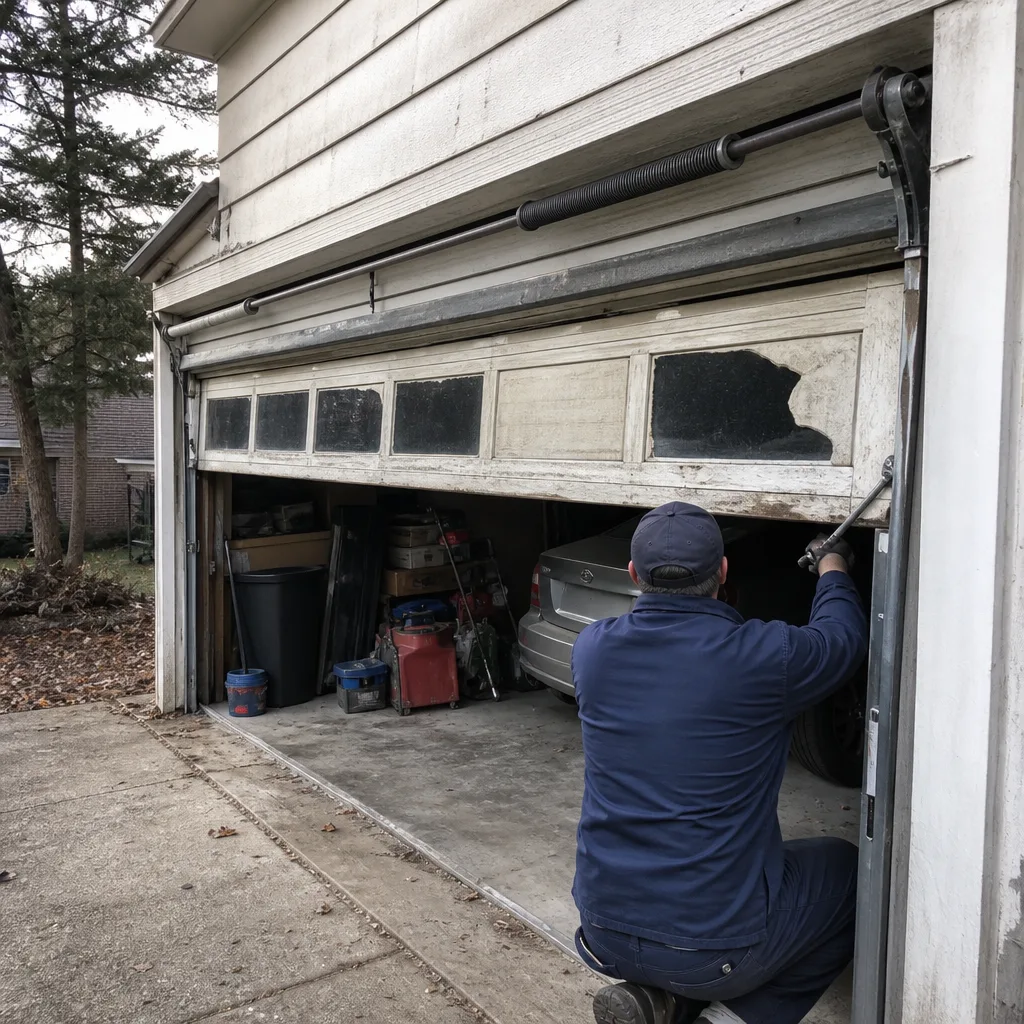 Before
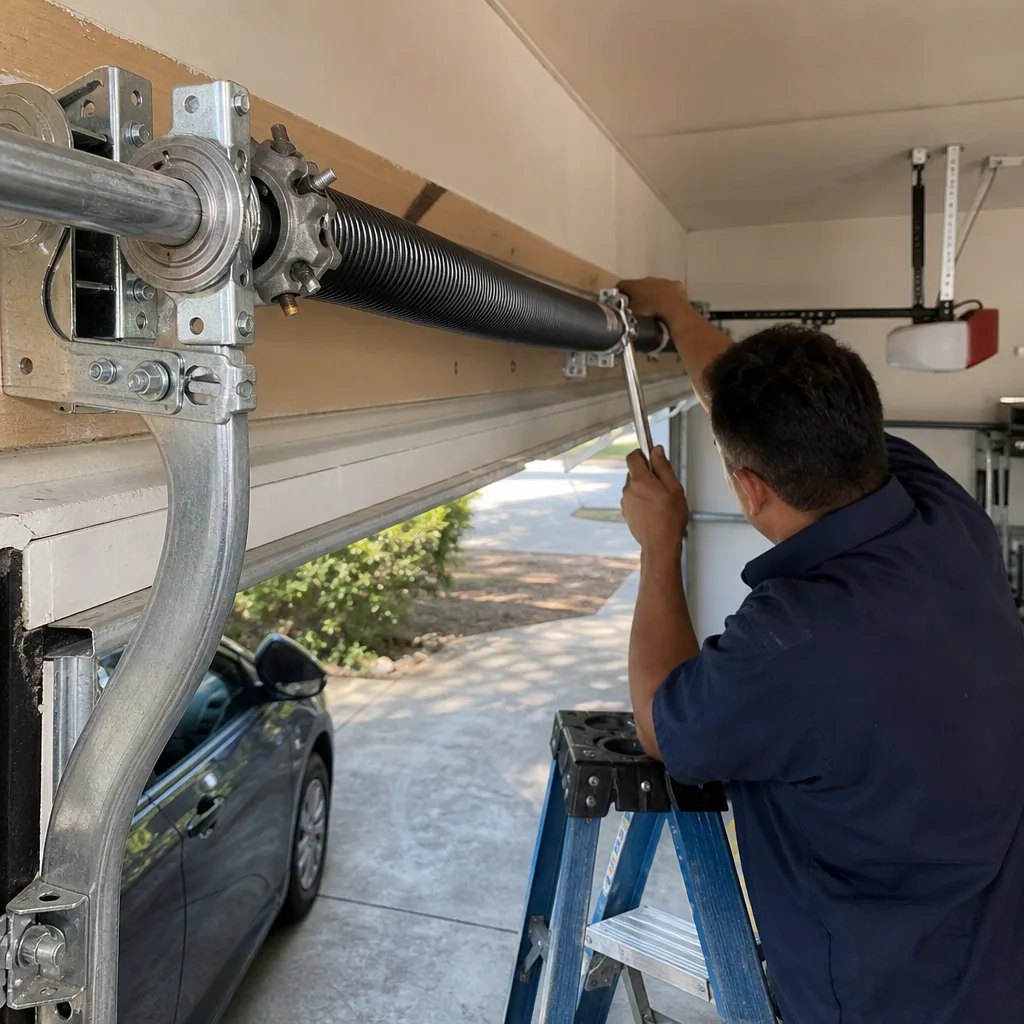 After
After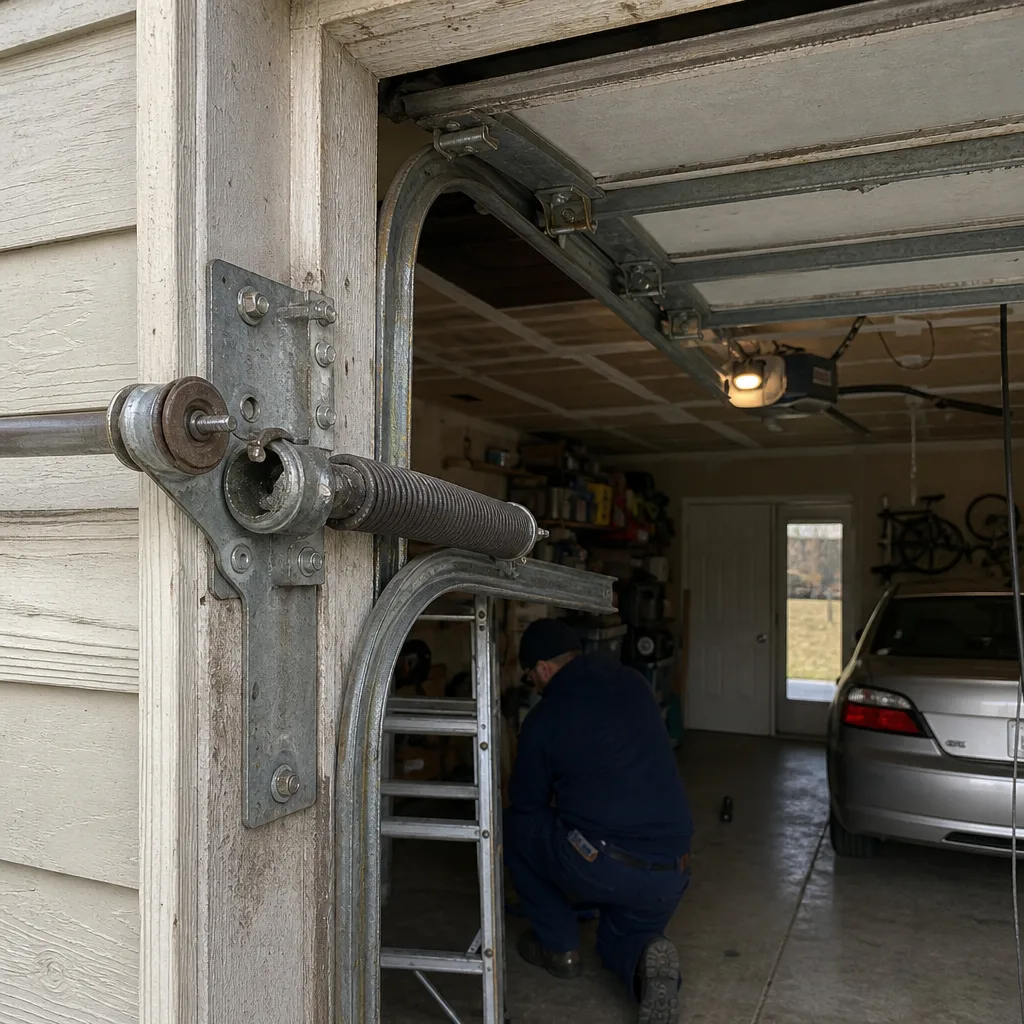 Before
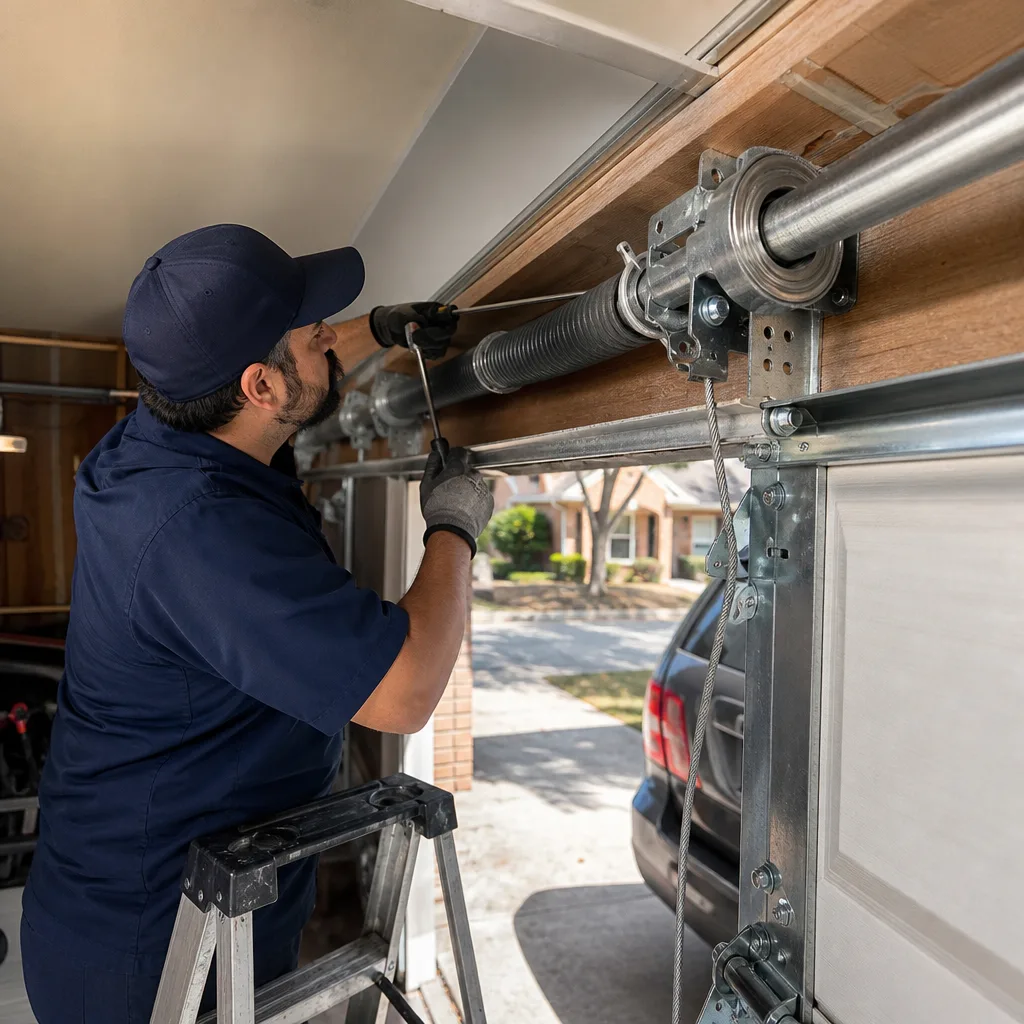 After
After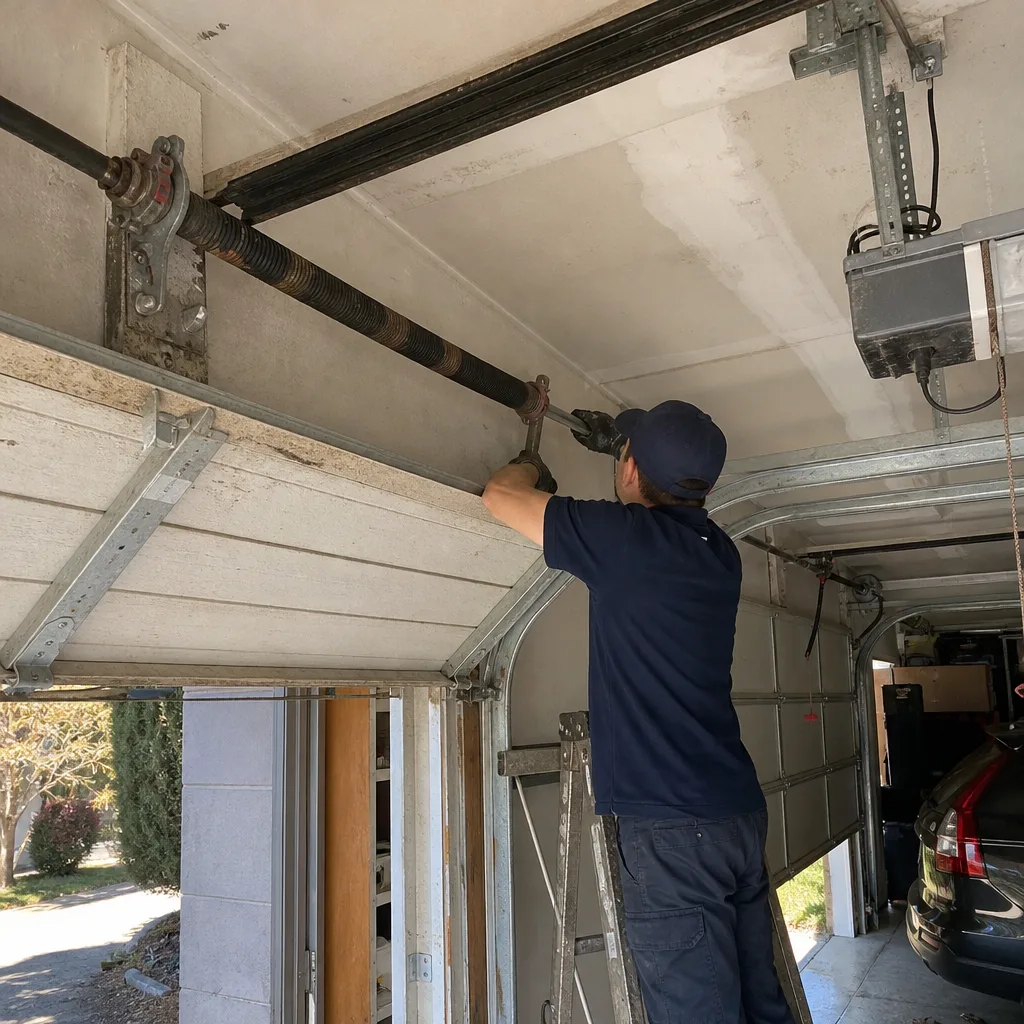 Before
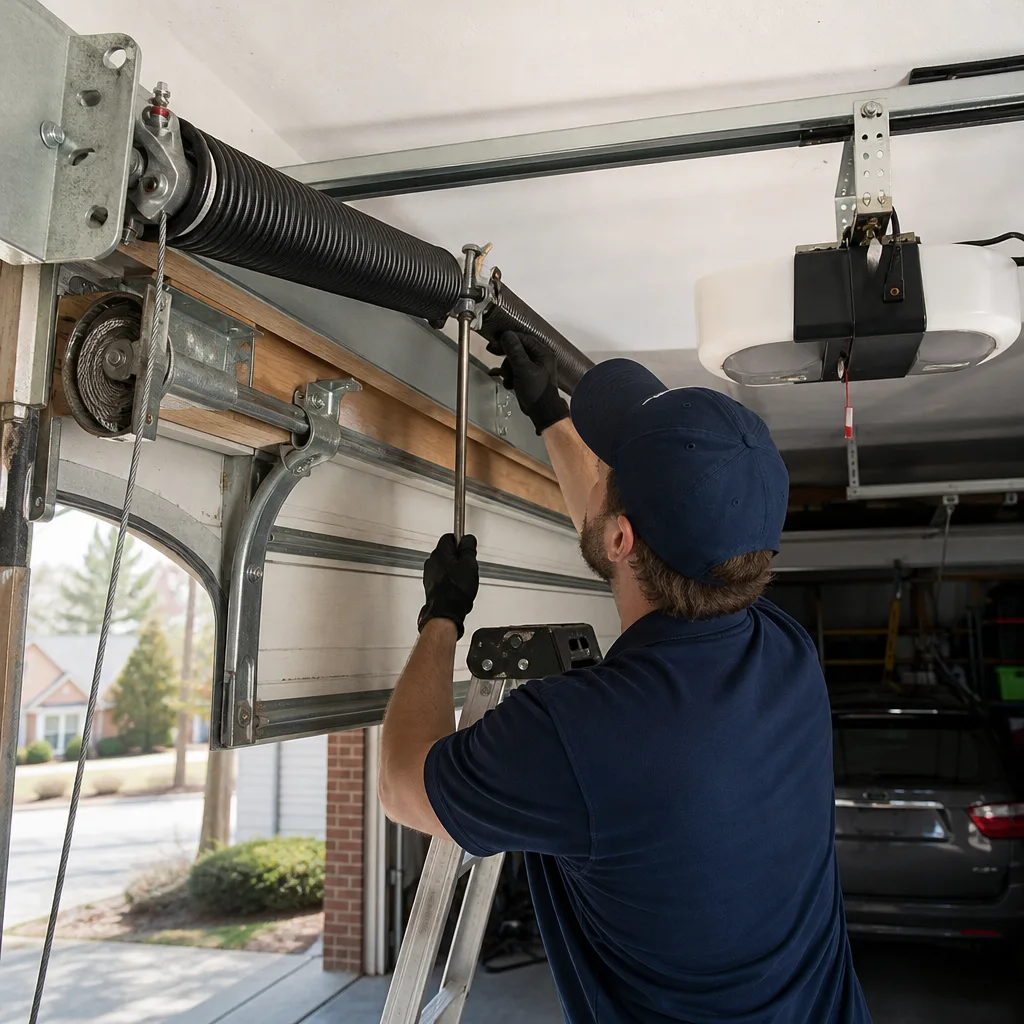 After
AfterFrequently Asked Questions
You should not. Torsion spring replacement requires winding springs under high tension with specialized tools, and an error can cause serious, permanent injury to your hand, wrist, or face. Professional replacement in Atlanta costs $150 to $280, which is less than most emergency department co-pays.
Most torsion spring replacements in Atlanta run $150 to $280 for both springs, parts and labor included. Single-spring replacement runs $90 to $180. A written estimate will always name the part, the labor, and the total before any work starts.
You’ll usually hear a loud bang like a firecracker from above the door when the spring snaps. You’ll also see a visible gap in the spring coil about two to three inches wide, and the door will be too heavy to lift manually. If you see a gap in the spring but no bang, the spring has failed.
No. Cable replacement requires releasing spring tension first, which is the same dangerous procedure as spring work. A professional in Atlanta charges $180 to $320 for a cable pair replacement, including door rebalancing.
Heat causes metal tracks and rollers to expand, and a marginal track alignment can become a bind when temperatures climb into the 90s. It can also indicate the opener’s motor is overheating. Note the time of day and temperature when it happens, because that information helps a technician pinpoint the cause.
Every six months is the practical answer for Atlanta’s climate. Plan for April before the summer heat and October before winter. Use lithium grease or a garage-door-specific lubricant, never WD-40. A maintenance call including full lubrication runs $75 to $125 if you’d rather have it done for you.
The Bottom Line
For Atlanta homeowners, DIY garage door maintenance is a real money-saver, but only when it’s applied to tasks that don’t carry injury risk. Lubrication, weather stripping, sensor alignment, and hardware tightening are all fair game. Spring work and cable work are not. They’re the two jobs where the risk of permanent injury is real, documented, and preventable by calling a professional. The honest framing matters to us because Garage Door Spring Repair in Atlanta is something we do every week, and we’d rather you call us before you hurt yourself than after.
Written by Marcus Ellery, Owner at Bramwell Garage Doors Atlanta, serving Atlanta since 2001.