
Last updated October 16, 2026
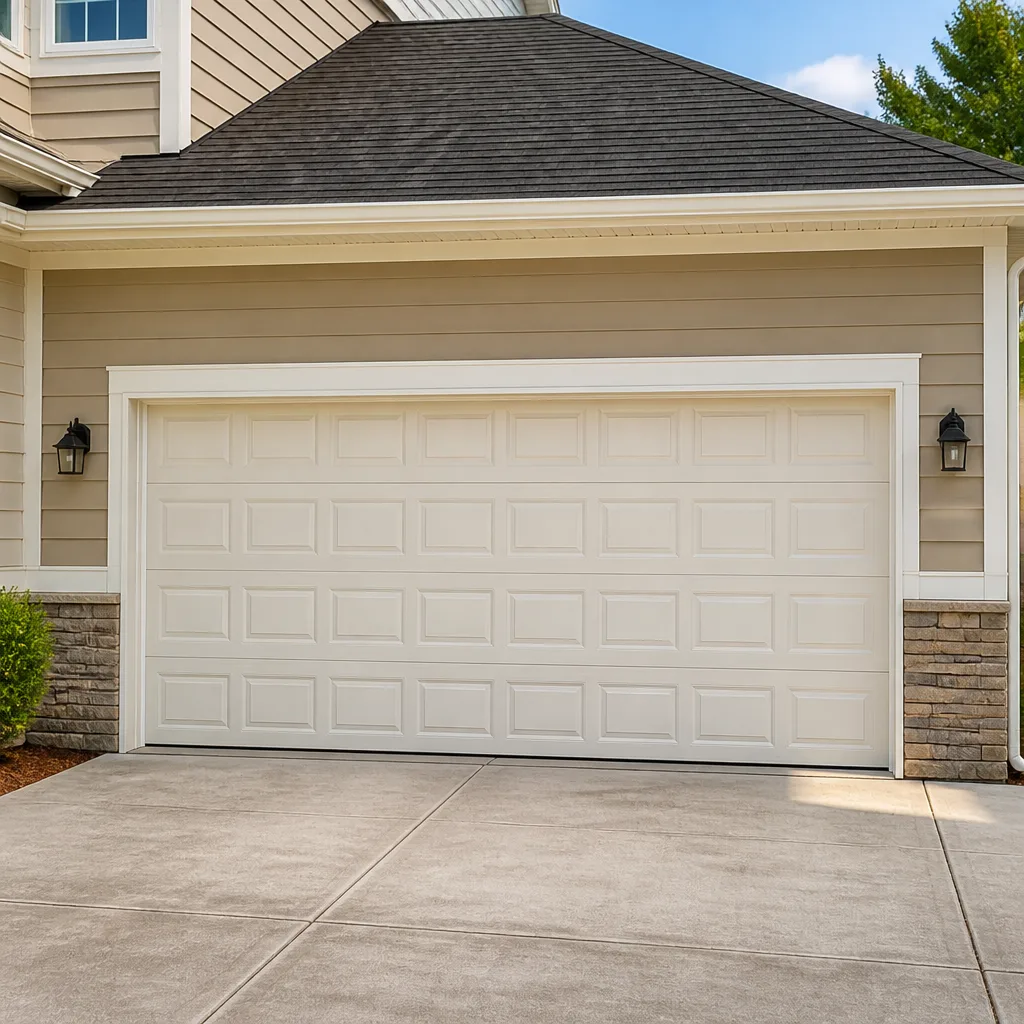 Raised-panel steel
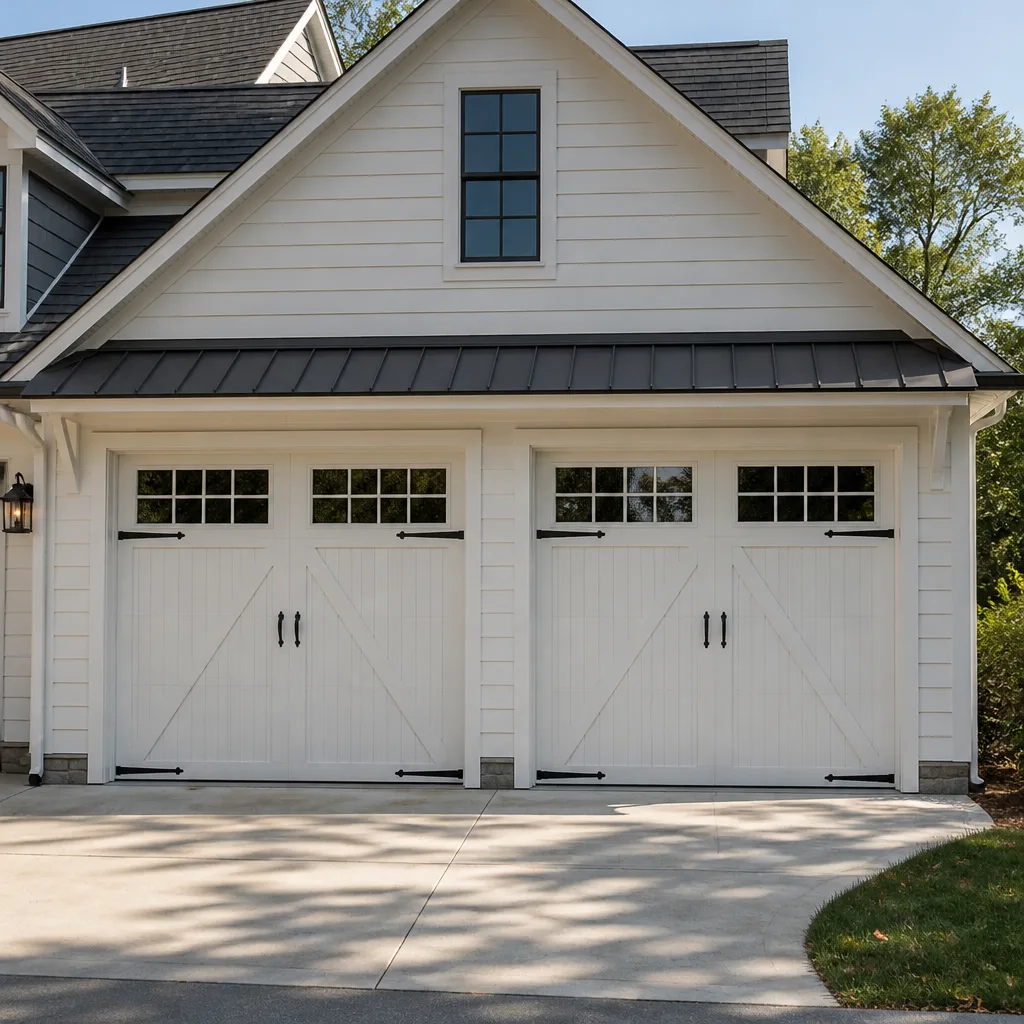 Carriage house
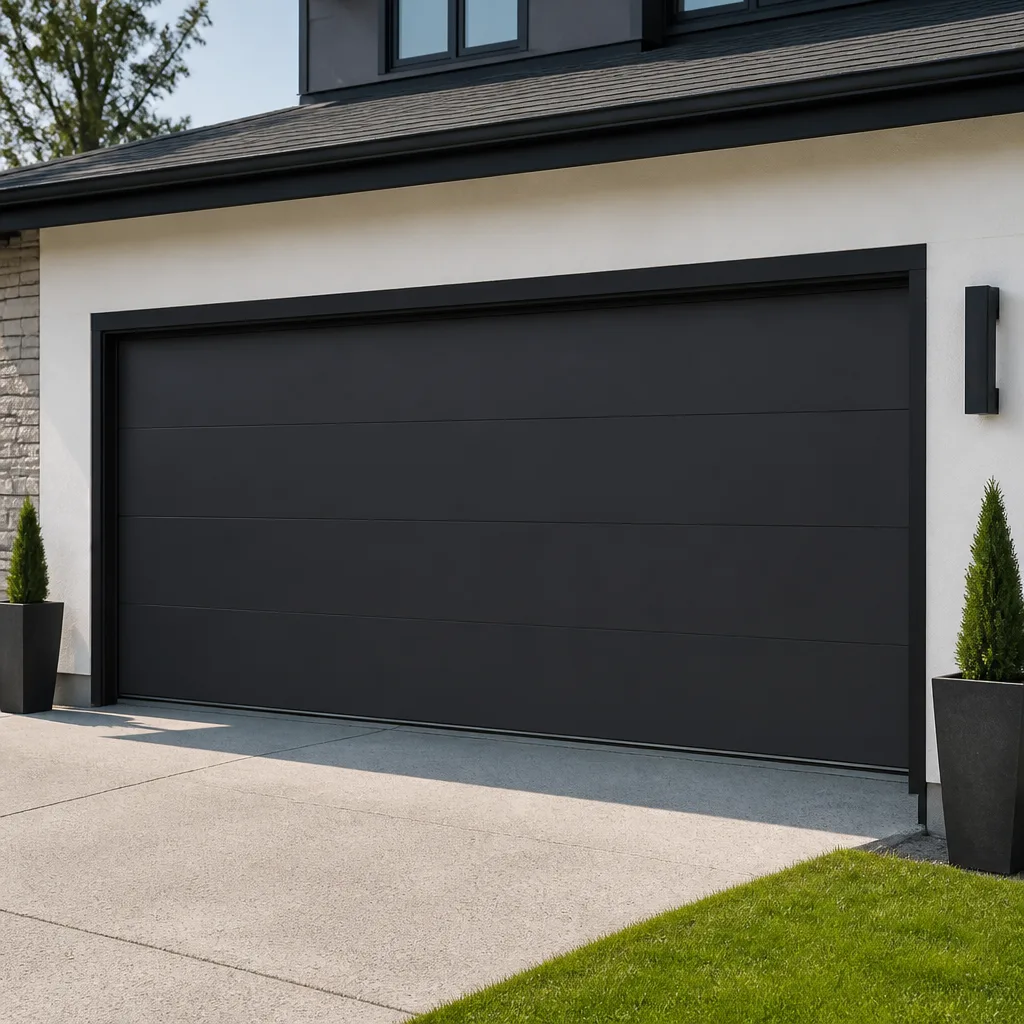 Modern flush
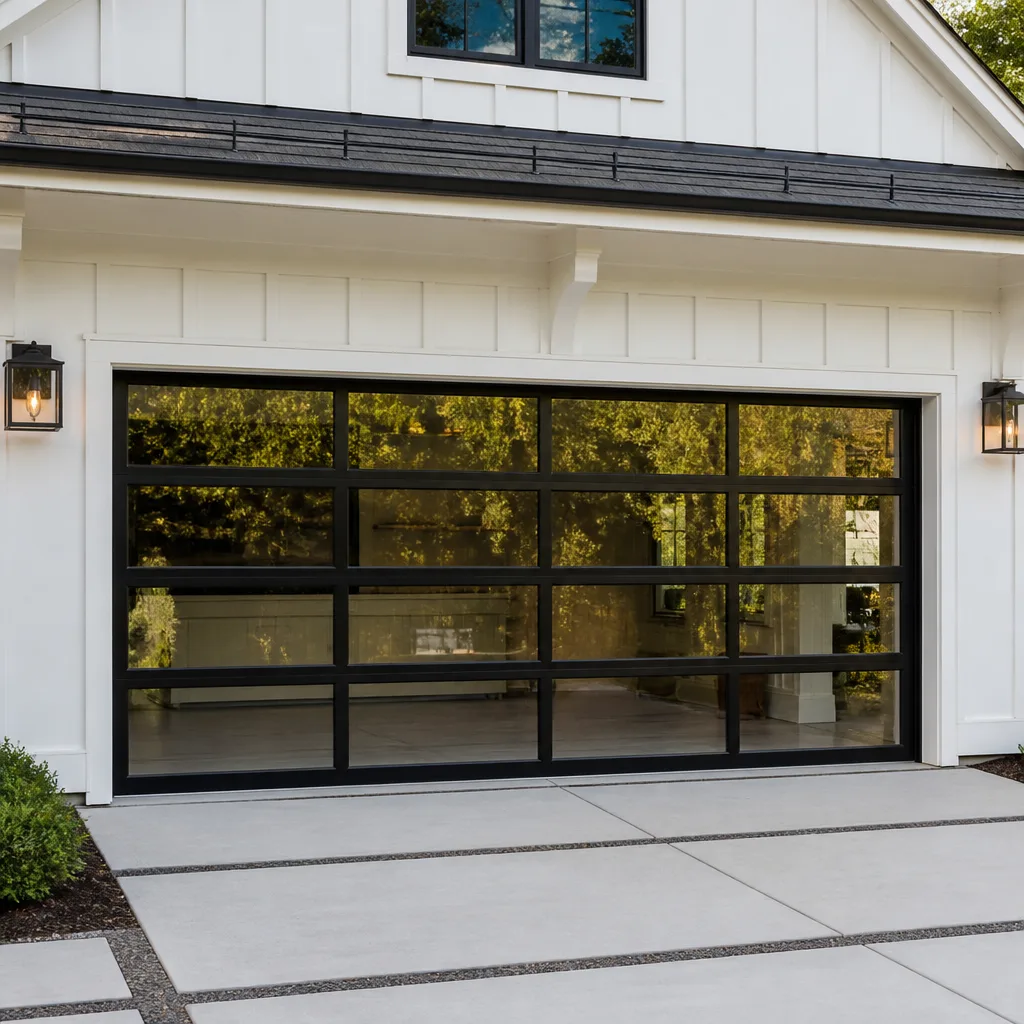 Full-view glass
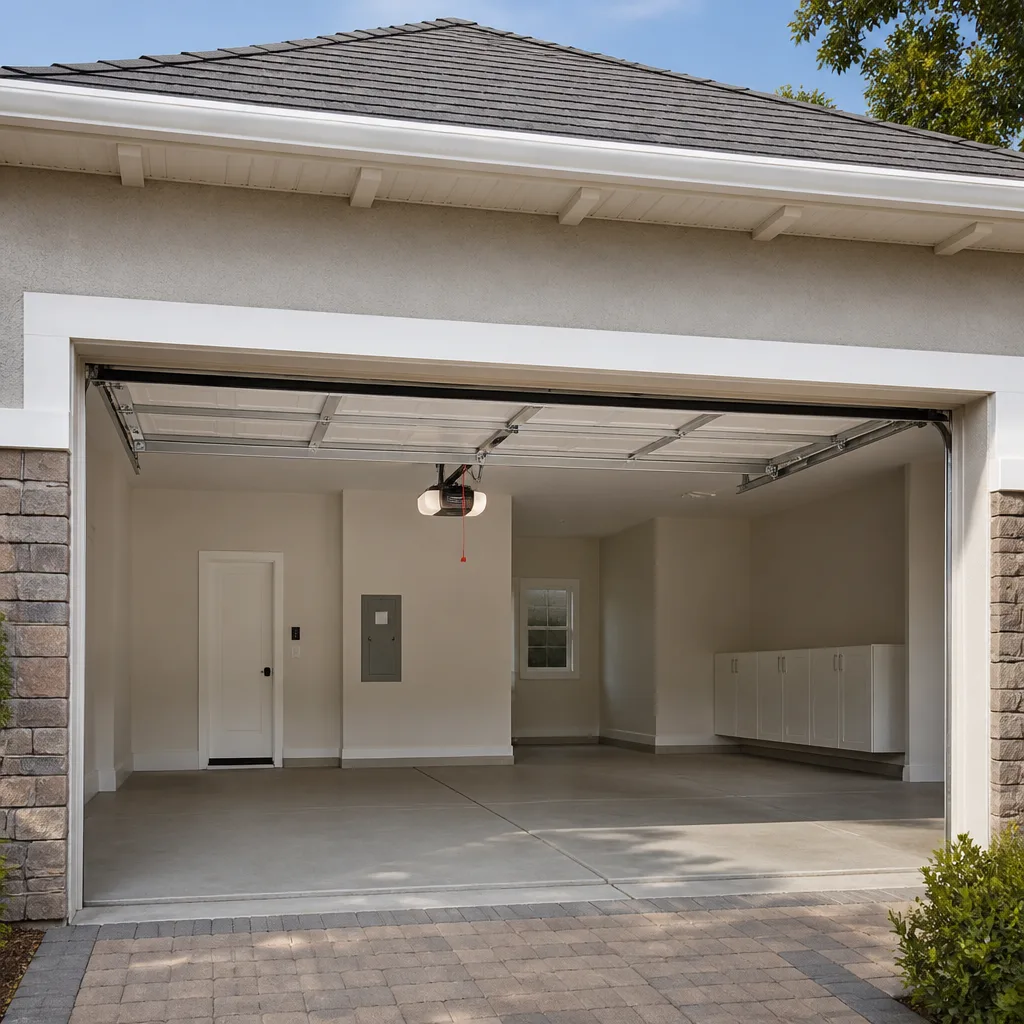 LiftMaster openers
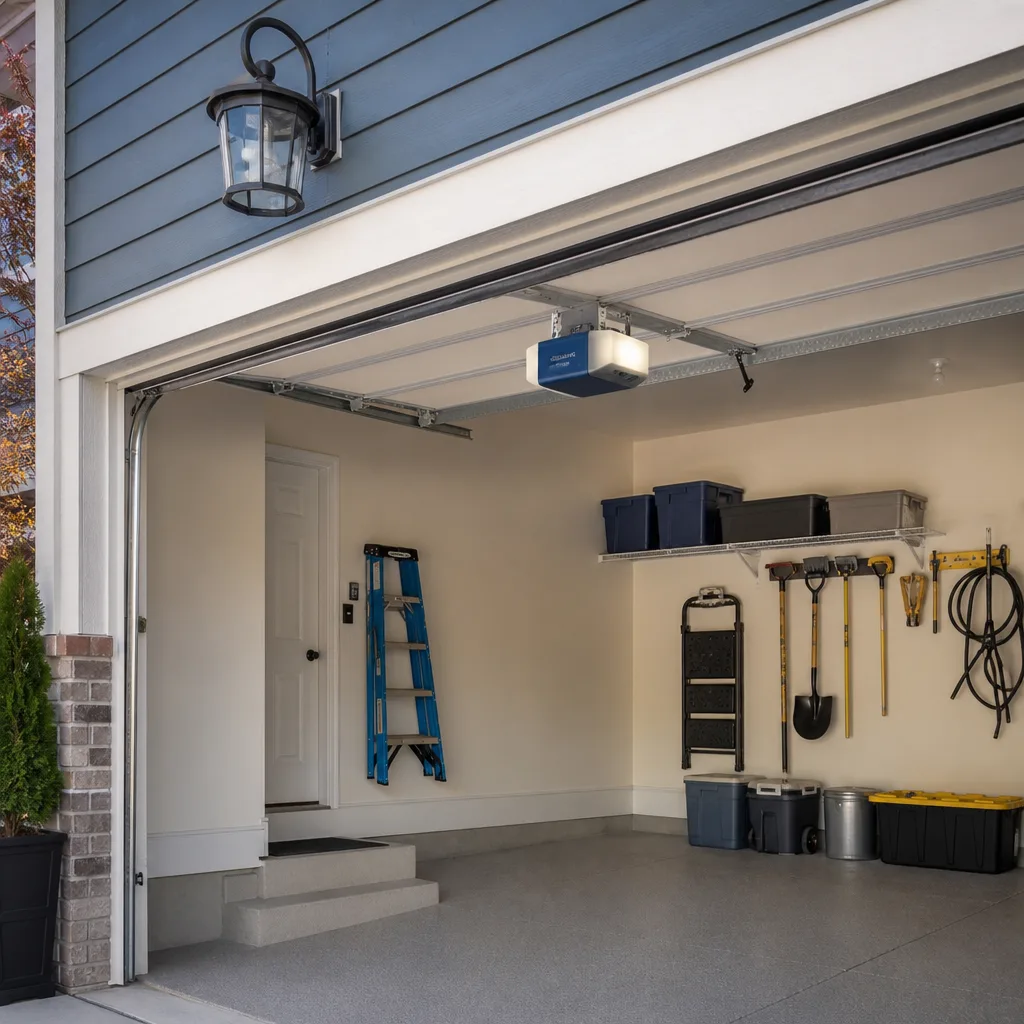 Chamberlain openers
Full 25-point door and opener safety check with every visit - springs, cables, rollers, tracks, and your LiftMaster or Chamberlain opener included
You get a price before we start. It does not change when the truck arrives.
Get your free estimateGarage Door Permits, Codes & Inspections in GA: What You Need to Know
A homeowner in Cobb County and a homeowner in the City of Atlanta can do the exact same garage door replacement and face completely different permit requirements. That’s not an exaggeration. Georgia leaves local code enforcement to individual jurisdictions, which means the answer to “Do I need a permit for a garage door in Georgia?” genuinely depends on your street address, your HOA, and whether you’re replacing an existing door or cutting a new opening. We’ve worked on doors across Fulton, DeKalb, Gwinnett, and Cobb since 2001, and we’ve seen the same confusion crop up again and again: a homeowner assumes a replacement door is “just a door,” no permit needed, and then discovers during a home sale two years later that the county disagrees. This guide unpacks Georgia’s patchwork of state code, county rules, and city ordinances so you’re not caught off guard, and you can explore our more guides & resources for related topics.
Styles & brands we work with
Quick Answer
In Georgia, replacing an existing garage door with a door in the same opening generally does not require a building permit in most jurisdictions, but installing a new garage door opening, converting a carport to a garage, or structural work around the door often does. Additionally, garage door openers must comply with the federal UL 325 safety standard, and some HOAs in Atlanta impose their own aesthetic and material rules on top of municipal code. Always verify with your local building department before starting, because a non-permitted installation can surface as a defect during a home sale inspection years later.
Table of Contents
- Georgia’s Adopted Building Code: What Actually Applies to Garage Doors
- When a Garage Door Replacement Triggers a Permit in Atlanta-Area Jurisdictions
- UL 325 and Garage Door Openers: The Safety Standard in Plain Language
- What Happens When a Non-Permitted Garage Door Surfaces During a Home Sale
- How to Verify Whether a Contractor Pulled a Permit on Your Behalf
- HOA Overlay Rules in Atlanta Subdivisions: What Municipal Code Doesn’t Cover
- What a Garage Door Inspection Actually Checks in Georgia
- Common Mistakes to Avoid
- When to Call a Professional
- Frequently Asked Questions
Georgia’s Adopted Building Code: What Actually Applies to Garage Doors
Georgia operates under a set of state minimum construction codes, and the one that matters most for garage doors is the International Residential Code (IRC), which Georgia adopts with state-specific amendments. The IRC governs one- and two-family dwellings, and it contains specific provisions for garage doors in Chapter 3 (Building Planning) and Chapter 6 (Wall Construction), among others. In plain language: the IRC tells your local building department how a garage door must be installed, supported, and sealed against weather, and it sets minimum standards for wind resistance, thermal protection, and means of egress.
What many Atlanta homeowners don’t realize is that the IRC requires garage doors to be listed and labeled by an approved agency. This means the door you buy from a manufacturer like Clopay or Amarr has already been tested to meet certain standards. If you’re replacing a door with a door of the same size in the same opening, the IRC generally treats this as a repair, not a new installation, and a permit is often not required, though you should watch for Garage Door Warning Signs: A Atlanta Homeowner’s Reference Guide that may indicate deeper issues. But the moment you change the opening dimensions, add a second door, convert a carport, or do anything structural, the IRC triggers a review.
Georgia also adopts the International Energy Conservation Code (IECC), which matters for garage doors because of thermal requirements. In climate zones like Atlanta’s (Zone 3), an attached garage does not need to be conditioned space, but the door between the garage and the house must meet air-sealing standards. A properly installed garage door with weatherstripping helps satisfy those standards. We routinely see doors in older Atlanta homes, especially in neighborhoods like Kirkwood and East Atlanta, where worn weatherstripping has quietly undermined the home’s air barrier for years.
For a deeper look at how code-compliant replacement works in practice, see our Garage Door Repair in Atlanta guide.
When a Garage Door Replacement Triggers a Permit in Atlanta-Area Jurisdictions
Here’s the part that catches people off guard: the rules are genuinely different depending on which jurisdiction you live in. We’re not talking about minor wording differences. We’re talking about a homeowner in unincorporated Fulton County facing no permit requirement for a like-for-like replacement, while a homeowner in the City of Atlanta may need a permit for the exact same job if the door is in a historic district or involves structural modifications.
Let’s break it down by the common Atlanta-area jurisdictions, based on current code as of early 2026:
- City of Atlanta: Requires a building permit for new garage door openings, conversions, and any work involving structural alteration. A simple like-for-like replacement of an existing overhead door typically does not require a permit, but if the door is in a designated historic district (like Grant Park, Inman Park, or Adair Park), you may need a Certificate of Appropriateness before changing door style or material.
- Cobb County: Requires a permit for new construction and additions, including new detached garages. Replacing an existing garage door in the same opening generally does not require a permit, but if you’re enlarging the opening or adding a door where one didn’t exist, you’ll need plan review.
- Gwinnett County: Similar to Cobb. A straight replacement needs no permit in most cases. But Gwinnett is strict about carport-to-garage conversions, which almost always require a permit and an inspection, because the county wants to verify that the new enclosure meets fire separation and structural requirements.
- DeKalb County: Has its own permitting process, and the unincorporated parts of the county have different rules than incorporated cities like Decatur or Brookhaven. In unincorporated DeKalb, a like-for-like replacement is usually exempt, but Decatur has its own building code enforcement and can be stricter.
- Fulton County (unincorporated): Generally treats like-for-like replacements as exempt from permit requirements. However, if you live in a city within Fulton, like Sandy Springs or Roswell, that city’s rules apply, not the county’s.
The takeaway: don’t assume. Call your local building department and ask specifically: “Is a building permit required to replace an existing garage door in the same opening at [your address]?” Get the answer in writing or note the name of the person who told you. If you’re planning a new Garage Door Installation in Atlanta, the question switches from “is a permit required?” to “when is it required?” and the answer is usually yes if the opening is new or altered.
Step-by-Step: How to Check Permit Requirements for Your Address
- Identify your jurisdiction. Use your property tax bill or a quick search of your address to determine whether you fall under a city (like Atlanta, Decatur, Sandy Springs) or an unincorporated county area (like unincorporated Fulton or Cobb).
- Visit the building department’s website. Most Atlanta-area jurisdictions now publish a “Do I Need a Permit?” page or a quick-reference chart for common residential projects.
- Search for “garage door” or “exterior door replacement.” Many jurisdictions list specific exemptions. If “garage door replacement” isn’t explicitly exempted, assume a permit may be needed and call.
- Call the permit office. Describe the job precisely: “I’m replacing an existing overhead garage door with a new door of the same dimensions. No structural changes. Do I need a permit?”
- Ask about HOA review. While you’re at it, confirm with your HOA (if you have one) whether they require architectural review before you install.
UL 325 and Garage Door Openers: The Safety Standard in Plain Language
Every garage door opener sold in the United States, including models from Chamberlain and Genie, must comply with UL 325, a federal safety standard that took effect in 1993 and has been updated multiple times since. UL 325 is not a Georgia-specific rule. It’s a national standard embedded in the IRC and enforced through product listing requirements. If you buy a new opener from a major manufacturer, it complies. But that doesn’t mean your installation automatically does.
Here’s what UL 325 requires in plain language:
- Automatic reversal: The opener must reverse if it encounters an obstruction while closing. This is tested with a 2×4 laid flat on the ground. If the door doesn’t reverse within two seconds of contact, the opener fails.
- Photo-eye sensors: Two electronic sensors must be mounted no higher than six inches above the garage floor, one on each side of the door opening. If anything breaks the invisible beam between them while the door is closing, the door must reverse.
- Entrapment protection: The system must prevent a person, especially a child, from being pinned under a closing door. This is the reason the photo-eyes exist, and it’s the reason a disconnected or bypassed sensor is a code violation and a serious safety hazard.
- Manual release: A clearly marked emergency release cord must allow the door to be disconnected from the opener manually, so you can open it by hand during a power outage.
We’ve been called out to homes across Atlanta where a previous homeowner or handyman disabled the photo-eyes because they kept getting knocked out of alignment. The opener still worked, so nobody thought twice, until a real estate inspection flagged the setup as non-compliant with UL 325. It’s a $75 fix on most openers, but it can hold up a closing if it’s discovered at the wrong time.
If you’re replacing an opener or having Garage Door Spring Repair in Atlanta done on a system with an older opener, ask the technician to verify the photo-eye alignment and reversal test as part of the job. A reputable company does this automatically and documents it. We do it on every service call, and it takes about 90 seconds.
What Happens When a Non-Permitted Garage Door Surfaces During a Home Sale
Here’s the scenario that keeps homeowners up at night: you replaced your garage door eight years ago, never pulled a permit because you didn’t think one was needed, and now you’re selling. The buyer’s home inspector notices that the door appears newer than the house, checks county records, and finds no permit on file. What happens next depends on the jurisdiction, the buyer’s lender, and the title company, but it’s rarely nothing.
In Georgia, real estate contracts typically require the seller to disclose known unpermitted work. If you genuinely didn’t know a permit was required, you may have a defense, but the burden shifts to you to prove the work was compliant. Some lenders will not approve a loan on a property with known unpermitted structural work, even if that work is as simple as a garage door. Title companies have gotten more rigorous since the 2008 housing crash, and unpermitted work can show up as a title exception, which means the title insurer won’t cover claims related to that work. That can kill a deal.
Even if the sale proceeds, the buyer may demand one of three things:
- A price reduction to cover the cost of bringing the installation into compliance, including potential permit fees, inspection fees, and any corrective work required by the inspector.
- A retroactive permit, which means you, the seller, must apply for a permit after the fact, open the wall or door assembly for inspection if requested, and pay any associated fees. Some jurisdictions allow this. Some don’t.
- Full remediation, meaning the door comes out, a permit is pulled, and a new door goes in. This is rare for a simple replacement but not unheard of for carport conversions or new openings.
The lesson from two decades of working in Atlanta real estate: the $150 you save by skipping a permit in 2022 can become a $1,500 concession in 2026. If you’re unsure, pull the permit. And if you bought a home with an existing garage door and you’re not sure whether it was permitted, check your county’s online permit portal. Most Atlanta-area counties now allow address-based searches. It takes five minutes and tells you exactly what’s on file.
How to Verify Whether a Contractor Pulled a Permit on Your Behalf
The standard practice in Georgia when a permit is required is that the licensed contractor pulls the permit in their name using their state license number, and the permit is posted on the job site. The homeowner is named on the permit as the owner, but the contractor is the responsible party for the scope of work. That’s how it’s supposed to work. Here’s the problem: some contractors skip the permit because it adds time and cost to a job, especially in busy seasons. They tell the homeowner “it’s just a door, you don’t need a permit” and hope the jurisdiction never notices. When the homeowner eventually discovers the truth during a home sale, the contractor is long gone.
We’ve heard this story from plenty of Atlanta homeowners who had no idea a permit was needed until their agent flagged it. The contractor vanished. The fix fell entirely on the homeowner.
Here’s how to verify whether a permit was actually pulled:
- Ask for the permit number before work starts. If a permit is required for your project, the contractor should be able to provide a permit number or application confirmation from the building department before the first day of work.
- Check the county or city permit portal. Fulton, DeKalb, Cobb, Gwinnett, and the City of Atlanta all have online portals. Search by address. If a permit was pulled, it will appear.
- Ask for the final inspection record. If the permit required an inspection, the building department will have a record of a final approval. Ask the contractor for a copy. If they say the inspection “wasn’t needed,” verify that directly with the building department.
- Verify the contractor’s license. Georgia requires a state-issued contractor’s license for most residential work above a certain dollar threshold. You can verify a license through the Georgia Secretary of State’s office website. A contractor who is reluctant to share their license number is a red flag.
The reality: some contractors avoid permits to save a day and a fee. But the fee is small, typically $50 to $150 for a simple garage door installation in most Atlanta-area jurisdictions. When a company skips that, ask yourself what else they might be skipping. A written price, a stated arrival window, and a written guarantee are boxtops for how a company runs its business. We operate under the Kingswell standard precisely because Atlanta homeowners deserve a company that doesn’t make them chase down this kind of thing after the fact.
HOA Overlay Rules in Atlanta Subdivisions: What Municipal Code Doesn’t Cover
Municipal code tells you what’s legal. HOA covenants tell you what’s allowed in your neighborhood. In many Atlanta subdivisions, especially newer ones in Cobb County, Gwinnett County, and North Fulton, the HOA has architectural review authority that goes far beyond building code. We’ve seen HOAs reject garage door styles, colors, and materials that the county would happily permit.
Here’s what a typical Atlanta HOA overlay might require:
- Color restrictions: Many HOAs limit garage door colors to a specific palette that matches the original builder’s spec. In subdivisions like those in Alpharetta or Johns Creek, a door that’s “close enough” to the approved color can get you a violation letter.
- Material restrictions: Some HOAs require specific materials. A neighborhood might allow steel doors but prohibit wood-look vinyl, or require carriage-house style doors on all homes. In Buckhead and other high-end Atlanta neighborhoods, HOAs often require wood or wood-composite doors from manufacturers like Amarr or Clopay’s premium lines.
- Window grid patterns: If your new door has windows (which we call “lites” in the trade), the HOA may have rules about grid styles, glass type, and whether the windows can be tinted.
- Insulation requirements: Some Atlanta HOAs require insulated doors on attached garages, even if county code doesn’t. An uninsulated steel door is cheaper, but your HOA may mandate an R-value minimum.
- Architectural review timing: Most HOAs in Atlanta require review before you install, not after. The review period is often 30 days. If you skip it and install a door the board doesn’t like, you can be fined and forced to replace it at your own expense.
Before you buy a door, pull your HOA covenants and search for “garage door” or “exterior alterations.” If you’re in an HOA community and you’re not sure what’s allowed, contact the architectural review committee in writing. Get the approval in writing before the door arrives. We mention this because we’ve replaced doors in the same Atlanta neighborhood for two different homeowners, one who got written approval and one who didn’t, and the one who didn’t paid for two doors.
What a Garage Door Inspection Actually Checks in Georgia
If your project does require a permit, a building inspector will come out at the end of the job, or at specific points during it, to verify compliance. For a garage door installation, the inspection is usually a final inspection, meaning the inspector shows up after the door is installed and the opener is wired. Here’s what they typically look at:
- UL 325 compliance: The opener’s reversal function and photo-eye sensors. The inspector will block the beam and close the door on a 2×4 to verify reversal.
- Structural attachment: The door tracks, brackets, and spring mounting plates must be securely fastened to the structure. In Georgia’s climate, with its humidity swings and occasional severe weather, proper attachment means the door won’t pull away from the wall when the springs are under tension.
- Weatherstripping and air sealing: The gap between the door and the rough opening should be sealed, particularly on the sides and top, to meet IECC air-sealing requirements for the home’s thermal envelope.
- Fire separation: If the garage is attached to the house, the wall between the garage and living space must maintain its fire rating. The inspector will verify that the door installation didn’t compromise any fire-rated assembly, and that the door between the garage and the house (the “man door”) still closes and latches properly.
- Wind load: In some jurisdictions, particularly in areas that have adopted stricter wind provisions, the inspector may verify that the door and tracks are rated for the wind zone. This is more common now than it was a decade ago, driven by updates to the IRC’s wind maps.
The inspection itself usually takes 15 to 20 minutes, and if everything checks out, the inspector signs off and the permit is closed. If something fails, the contractor is required to correct it and call for a re-inspection. That’s how it’s supposed to work. When a contractor tells you an inspection “isn’t necessary” for a job that required a permit, that’s a signal to ask more questions.
For more context on what happens on a typical service visit, including how we handle the Kingswell guarantee on every job, see our Bramwell Garage Doors Atlanta home page.
Common Mistakes to Avoid
- Assuming a permit is never required for a garage door. Like-for-like replacements usually don’t need one in most Atlanta-area jurisdictions, but new openings, carport conversions, and structural changes almost always do. Check your specific address, not the general rule.
- Skipping the HOA review. In Atlanta subdivisions with active architectural committees, installing a door without written approval can force you to remove and replace it at your own cost. The review takes 30 days and costs nothing.
- Disabling photo-eye sensors to stop false reversals. This is a UL 325 violation, a safety hazard, and a defect that will show up on a home inspection. A sensor that keeps misaligning is a symptom of another problem, usually track movement or a door that needs balancing.
- Trusting a contractor’s verbal assurance that “no permit is needed” without verifying independently. The homeowner is the one who bears the consequence during a sale, not the contractor. Call the building department yourself.
- Not keeping permit records. If a permit was pulled for your garage door installation, save a copy alongside your other home records. When you sell, you’ll need to produce it, and digging through a county portal during escrow is the wrong time to do it.
- Replacing a garage door on a home in a historic district without checking with the city first. In Atlanta neighborhoods like Inman Park and Grant Park, the urban design commission has authority that supersedes the standard permit exemption. A door that’s not appropriate for the district can trigger fines and forced replacement.
- Buying a door from a big-box store and having it installed by someone without checking jurisdiction-specific requirements. The store won’t tell you that your HOA bans that color, or that your county requires wind-rated reinforcement. That research is on you.
When to Call a Professional
If you’re replacing a garage door in the same opening with the same dimensions, and your jurisdiction doesn’t require a permit, a skilled homeowner with the right tools can sometimes handle the physical installation. But that’s a narrow set of circumstances. The moment you’re dealing with a new opening, a carport conversion, an HOA with architectural review, a historic district, or an opener with UL 325 compliance questions, you want a professional who works with these rules every week.
There’s also the safety piece. Garage door springs, especially torsion springs, hold enormous tension. We’re not going to give you step-by-step instructions on spring work, because the risk of serious injury is real, and a professional knows how to do it safely. If your door has a broken spring, a door that’s come off its tracks, or an opener that’s reversing improperly, that’s a call for a trained technician, not a weekend project.
Bramwell Garage Doors Atlanta offers free estimates in Atlanta, and we pull permits when they’re required, in our name, with the homeowner named on the record. Call (229) 792-2327 to talk through your project, your jurisdiction, and what a written price looks like before any work starts. If you’re weighing a new Garage Door Installation in Atlanta, we’ll walk you through the permit picture before you commit to anything.
Frequently Asked Questions
In most Atlanta-area jurisdictions, replacing an existing garage door in the same opening with a door of the same size does not require a building permit. However, new openings, enlargements, carport conversions, and structural alterations typically require a permit. Verification with your local building department is the only way to know for certain, because the rules vary by city and county.
UL 325 is a federal safety standard that requires automatic garage door openers to have a working reversal mechanism and photo-eye sensors mounted no higher than six inches above the floor. Every new opener sold in the U.S. from manufacturers like Chamberlain and Genie complies with the standard, but the installation must maintain compliance, which means sensors must be aligned, connected, and tested. Call us at (229) 792-2327 if you want your current opener checked.
Yes. Unpermitted work can appear as a title exception, trigger a lender’s refusal to fund, or lead to a buyer demanding a price reduction or retroactive permit. Many Atlanta real estate contracts now include specific disclosure language about unpermitted work, and the burden falls on the seller to prove compliance.
Search your county’s online permit portal by address. Fulton, DeKalb, Cobb, Gwinnett, and the City of Atlanta all maintain searchable databases. If no permit appears and one should have been required based on the scope, you may need to address it before selling.
A typical final inspection verifies UL 325 opener compliance, structural attachment of tracks and brackets, weatherstripping and air sealing, and fire separation between the garage and living space. The inspector will test the reversal function and photo-eyes on site.
Yes. When a permit is required for an installation, we pull it in our name and list the homeowner on the record. We also provide a written price before any work starts, so the number on the invoice matches the number you approved. Call (229) 792-2327 for a free estimate and we’ll tell you exactly what your jurisdiction requires.
The Bottom Line
Georgia’s garage door permit rules are a patchwork, and the difference between a Cobb County homeowner and a City of Atlanta homeowner can be the difference between a simple replacement and a permit-and-inspection process. The safest approach is to verify your specific jurisdiction’s requirements in writing, pull the permit when it’s required, keep the records, and never assume an HOA won’t have something to say about your new door. The cost of checking is five minutes. The cost of not checking can surface years later, on a closing table, at the worst possible moment. If you’re in Atlanta and want a clear answer on what your project actually needs, call (229) 792-2327. We’ll tell you what we know, what we need to verify, and what it will cost before anything gets scheduled.
Written by Marcus Ellery, Owner at Bramwell Garage Doors Atlanta, serving Atlanta since 2001.
See the difference
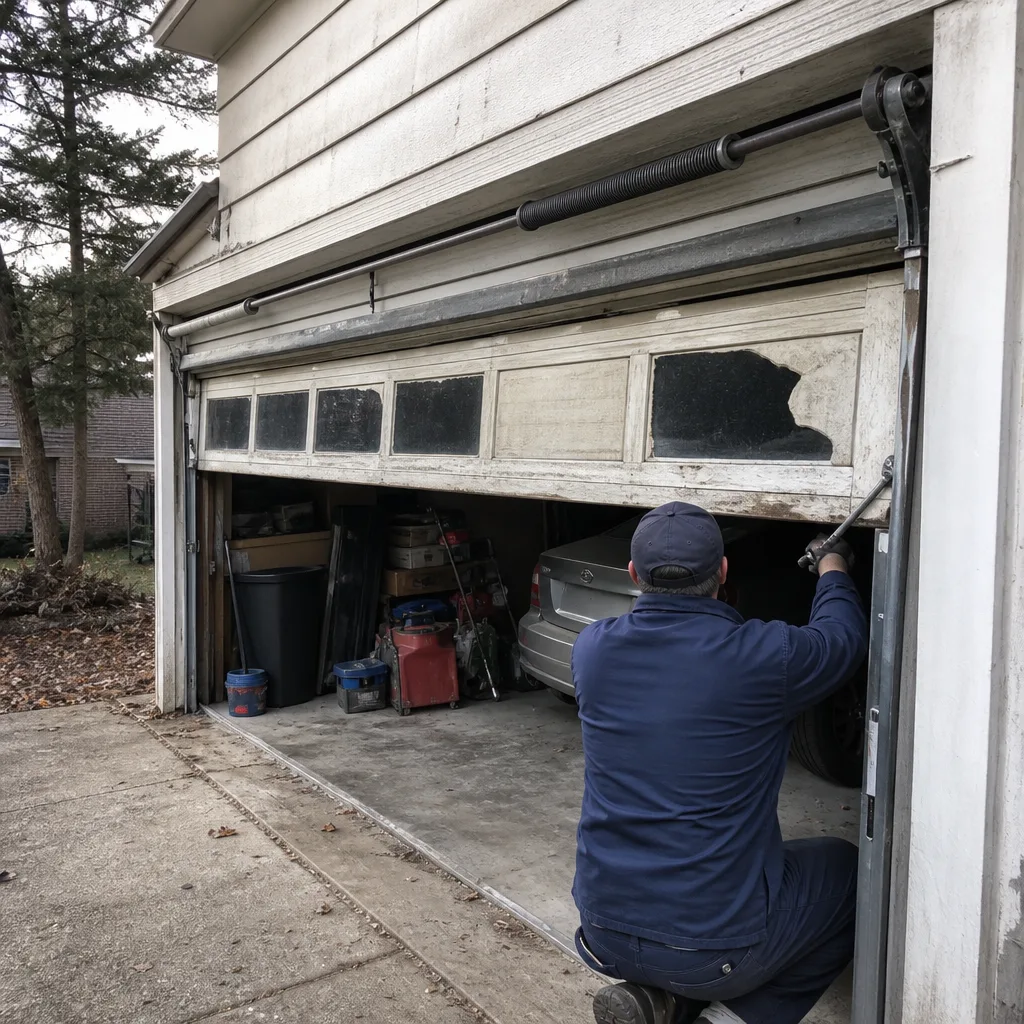 Before
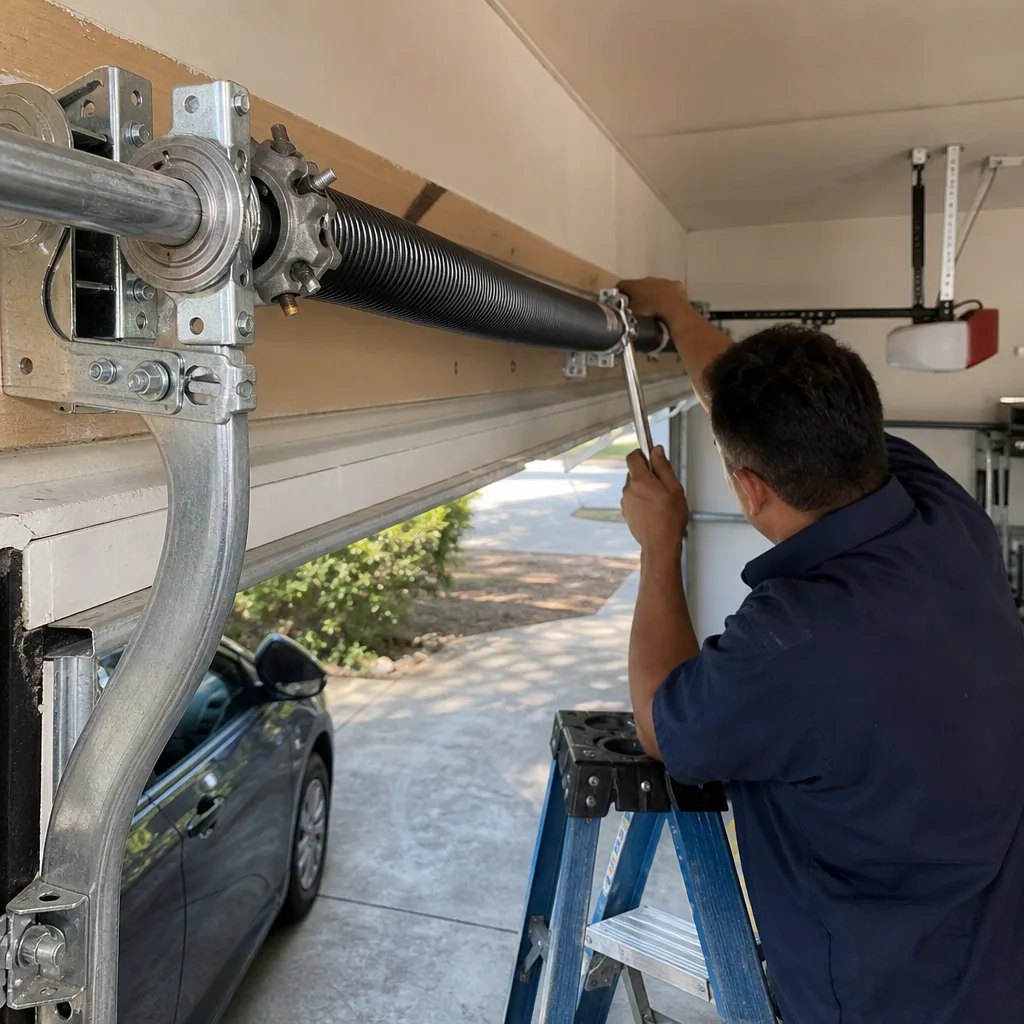 After
After Before
 After
After Before
 After
After