
Last updated October 16, 2026
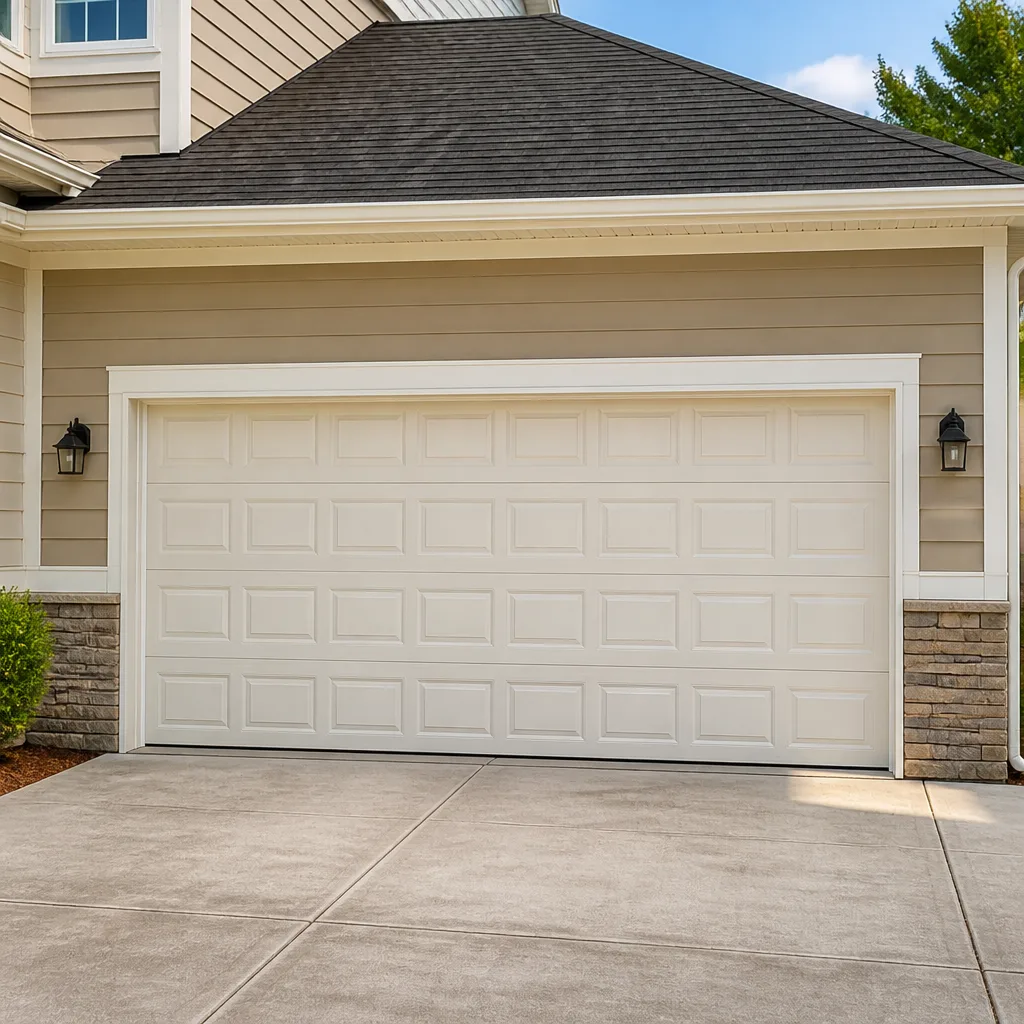 Raised-panel steel
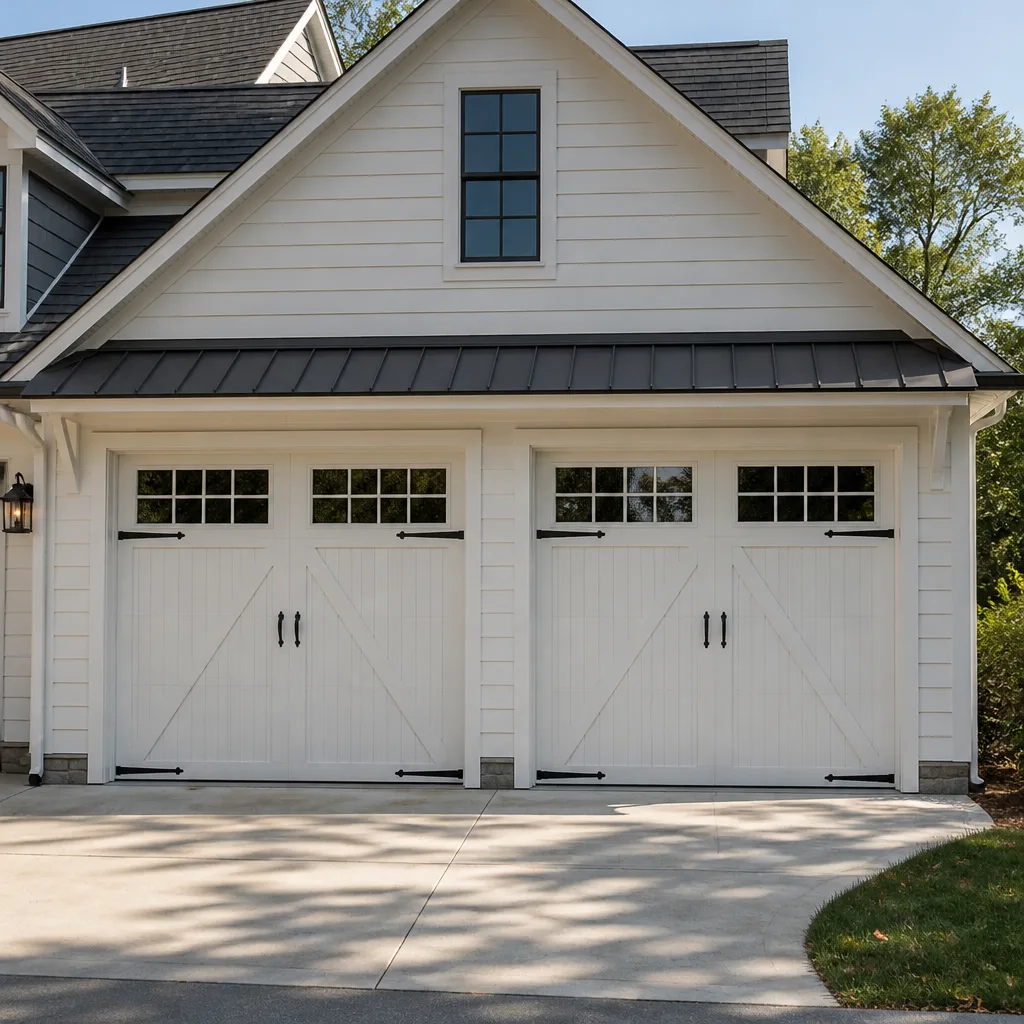 Carriage house
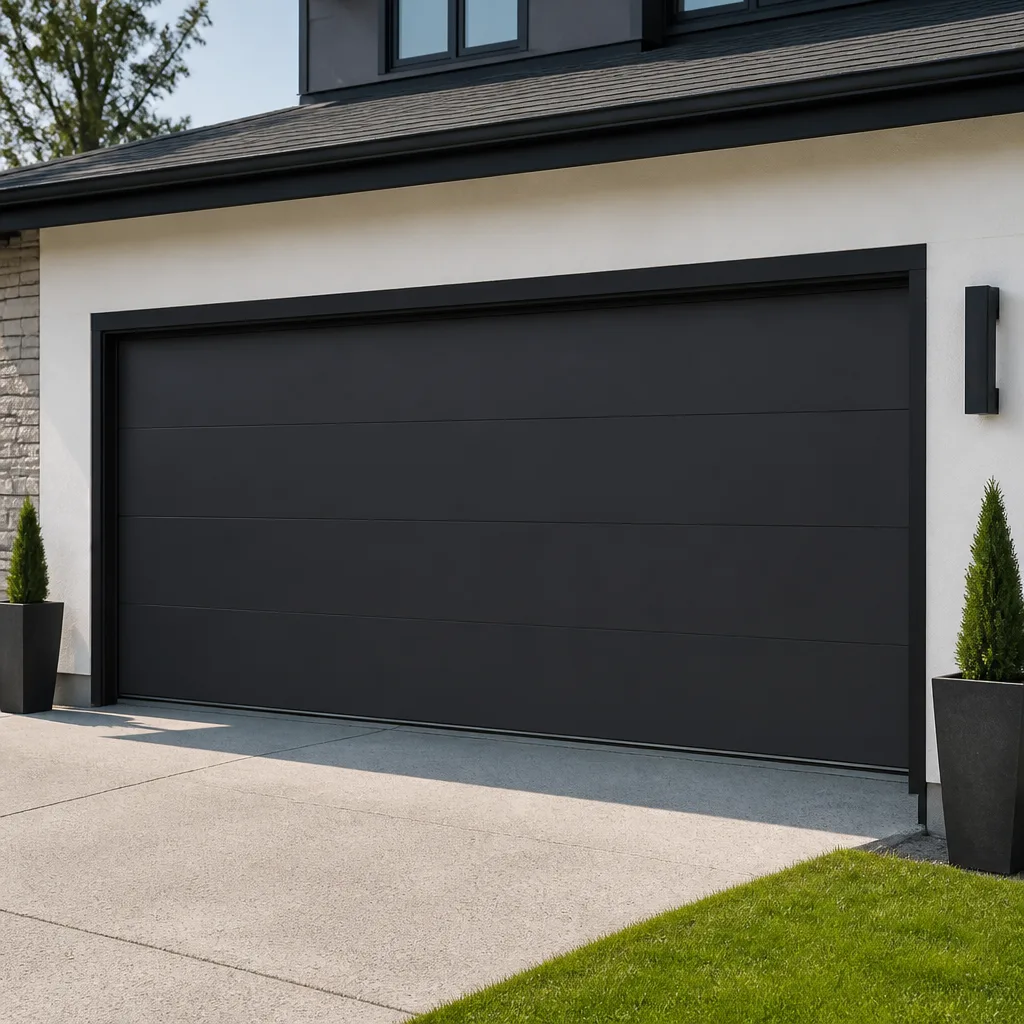 Modern flush
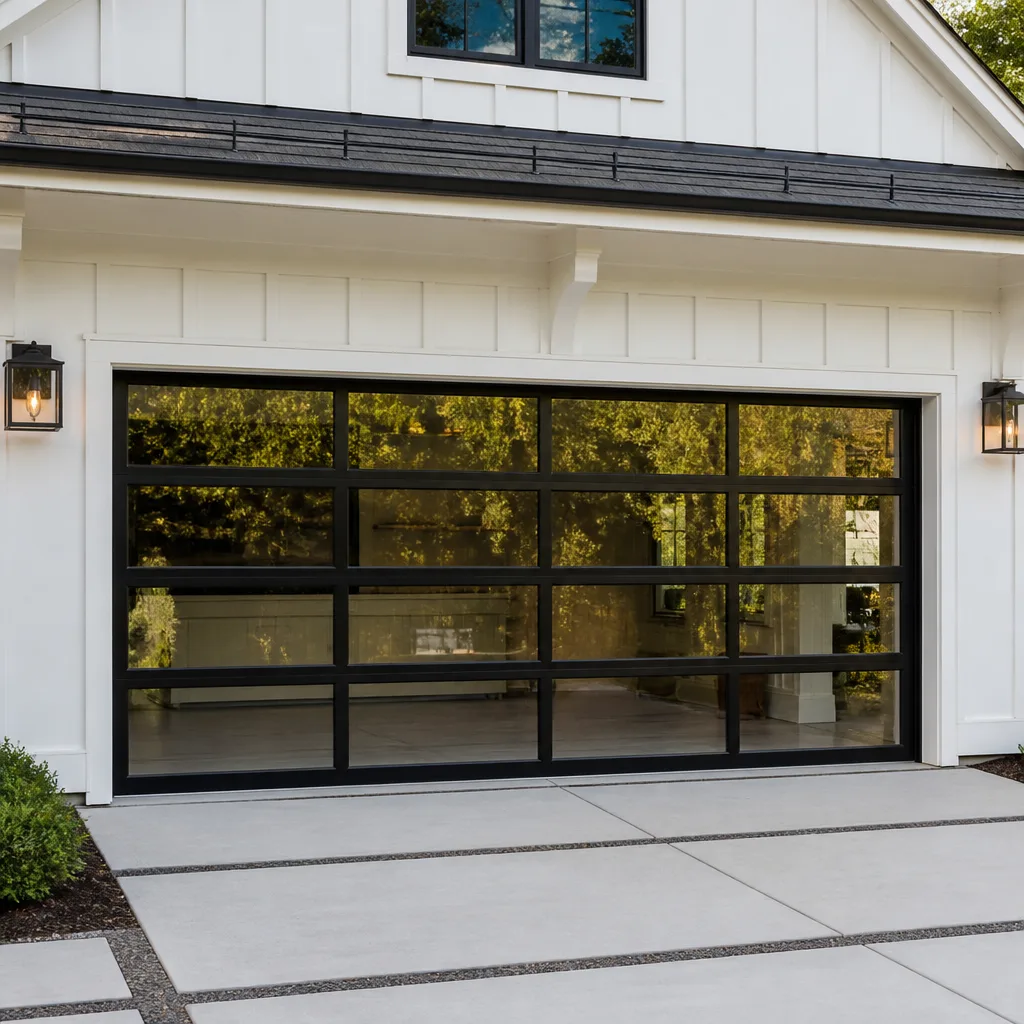 Full-view glass
 LiftMaster openers
 Chamberlain openers
Full 25-point door and opener safety check with every visit - springs, cables, rollers, tracks, and your LiftMaster or Chamberlain opener included
You get a price before we start. It does not change when the truck arrives.
Get your free estimateGarage Door Warning Signs: A Atlanta Homeowner’s Reference Guide
A garage door that shudders on the way up isn’t just “acting up.” It’s giving you a mechanical diagnosis in real time. The pitch of a squeal, the timing of a click, the way the door hesitates halfway through its travel, each of these maps to a specific component with a specific repair cost and a specific level of urgency. In Atlanta, where humidity sits heavy eight months of the year and red clay dust coats everything near a driveway, the warning signs show up differently than they do in Phoenix or Denver. This guide connects what you’re hearing and seeing to the part that’s actually failing, so when you call a garage door repair service in Atlanta, you can describe the problem in terms the technician respects and that keep you from paying for parts you don’t need.
Styles & brands we work with
Quick Answer
The most common garage door warning signs in Atlanta are loud bangs from a snapped torsion spring, grinding or squealing from worn roller bearings, a door that slows or hesitates mid-travel from limit switch or logic board problems, and uneven gaps at the floor from track misalignment. If you hear a sudden bang or see a visible gap in the coil above the door, stop using the door immediately and call a professional. In Metro Atlanta’s humid climate, rust-related failures on springs, cables, and roller bearings appear years earlier than the national average, which makes regular visual inspection here more important than more guides & resources typically suggest for milder climates.
Table of Contents
- Sound Diagnostics: Bang, Grind, Squeal, and Click
- Visual Inspection: Springs, Rollers, and Floor Gaps
- Behavioral Warnings: Slow Response, Partial Opening, Unexpected Reversal
- The Two Signs That Mean Stop Using the Door Today
- How Atlanta’s Climate Accelerates Specific Failures
- Component-by-Component Warning Sign and Cost Guide
- Common Mistakes to Avoid
- When to Call a Professional
- Frequently Asked Questions
- The Bottom Line
Sound Diagnostics: Bang, Grind, Squeal, and Click
A garage door talks before it fails, and the four sounds we hear most from Atlanta homeowners map to four very different problems at four very different price points. The load-bearing parts of your door, the torsion springs, the cables, the roller bearings, each make a characteristic noise when they’re failing. Learning the difference can help you decide whether to call for emergency service or whether the door can wait until Monday.
The Bang: Torsion Spring Snapped
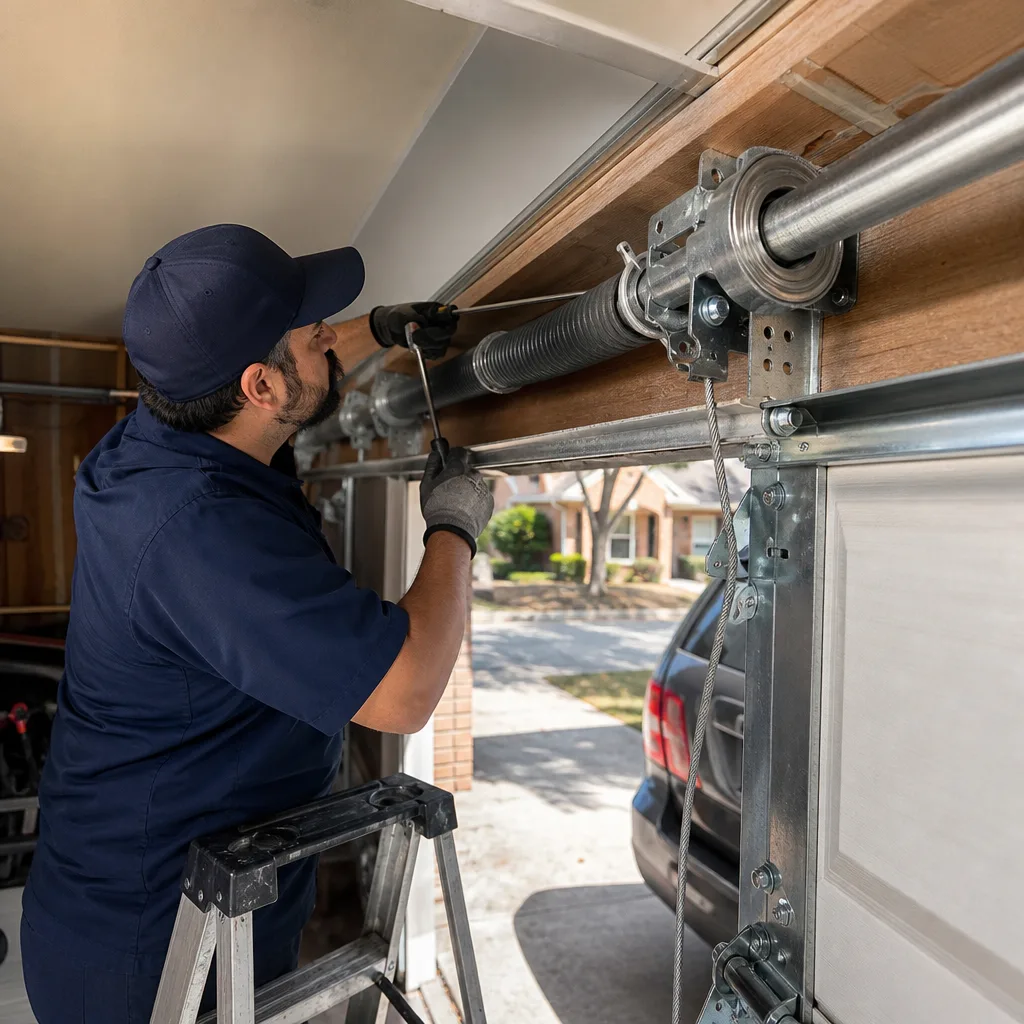
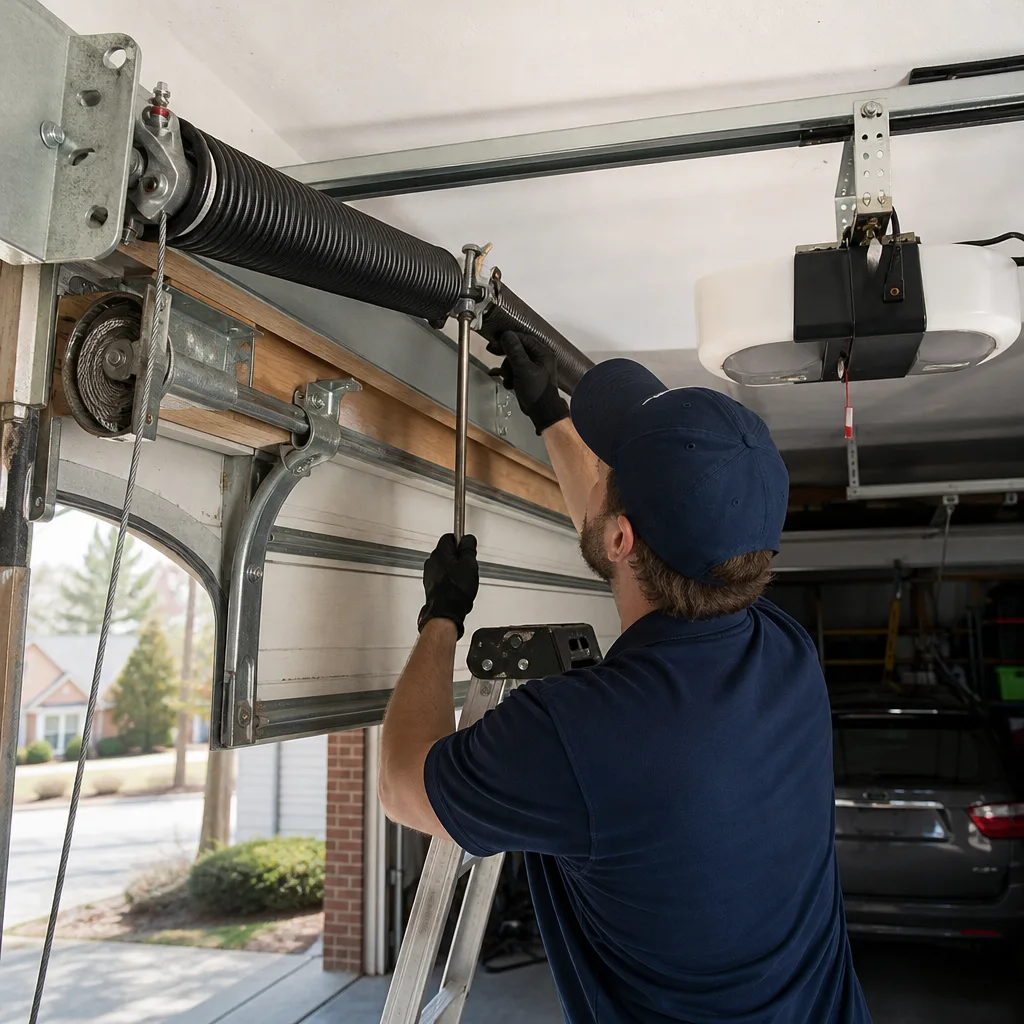
A loud, sharp bang, often described as sounding like a firecracker or a car backfiring, is almost always a torsion spring breaking. The torsion spring is the heavy coil mounted horizontally above the door. It stores the tension that counters the door’s weight. When it snaps, all that stored energy releases at once. This is a garage door spring repair in Atlanta that needs to happen before the door moves again. Expect to pay between $180 and $340 for a typical torsion spring replacement in the Atlanta market, parts and labor included. Some companies will try to sell you both springs even when only one snapped. That is sometimes defensible, since both springs typically have the same number of cycles on them, but it is never mandatory. Ask the technician to show you the date code or wear pattern first.
The Grind: Worn Roller Bearing
Grinding sounds metallic and continuous. It means a part that should roll is now sliding or scraping. Usually this is one of the door’s rollers, the small wheels that ride inside the vertical and horizontal tracks. Each roller has a bearing inside it. When the bearing wears out or a bit of grit gets past the seal, the roller begins to drag instead of spin. In Atlanta, where red clay dust works its way into every available crevice, roller bearings wear faster than in drier climates. A single worn roller should cost $120 to $180 to replace, including the service call. Replacing all of them at once typically runs $250 to $400 for a standard two-car door, and if several are grinding, that is usually the better use of your budget.
The Squeal: Dry or Worn Hinges and Bearings
A squeal is higher-pitched than a grind and often comes and goes with the door’s position. It typically points to a lubrication problem, not a mechanical failure, at least at first. The hinges that connect the door panels, the roller bearings, and the bearing plates at each end of the torsion bar all need periodic lubrication in Atlanta’s climate. High heat accelerates lubricant breakdown, and Georgia humidity pulls moisture into the assembly. You can quiet a squeal temporarily with a silicone-based garage door lubricant, but if the squeal returns within a few weeks, the bearing is beginning to fail. On a service call, we find that a door that has been squealing for months often turns out to be a more expensive repair than if the homeowner had called the first time they heard it. A lubrication service call in Atlanta typically runs $75 to $120, less than half the cost of replacing a seized bearing assembly later.
The Click: Loose Trolley or Limit Switch Noise
A click is usually an electrical or mechanical engagement sound. It can come from the opener’s relay, from the trolley carriage engaging with the screw or chain drive, or from a limit switch cycling. A single click when you press the wall button or remote that is not followed by movement pointed to the opener’s motor relay or a fried logic board. These are jobs for a technician with the right test tools. A garage door opener logic board replacement on a Chamberlain, LiftMaster, or Genie unit in Atlanta typically runs $200 to $350, parts and labor. A clicking sound that repeats rhythmically while the door moves is often a loose trolley carriage. Tightening the carriage assembly and realigning the chain or belt is a $100 to $150 service call.
Visual Inspection: Springs, Rollers, and Floor Gaps
You do not need to be mechanically inclined to spot most of the warning signs that prevent a breakdown. A visual check takes about five minutes and requires no tools. Once a month, stand inside the garage with the door closed and look at the parts in this order: the springs above the door, the rollers inside the vertical tracks, and the gap where the door meets the concrete floor.
The Gap in the Coil
Look at the torsion spring directly above the center of the door. On most residential doors in Atlanta, you will see either one coil spanning the full width or two coils meeting near the middle. What you’re checking for is a break in the coil. Because the spring is under high tension, a break does not always make itself obvious. The coil will separate into two segments, and you’ll see a visible gap, often an inch or two wide, where the metal has snapped. A two-inch separation in a coil is the single most reliable warning sign that the spring is done. Do not try to replace it yourself. The energy stored in a wound torsion spring is enough to cause serious injury, and a professional has the winding bars and the training to release it safely.
Rust Streaking Below a Roller
Look at the track that runs up each side of the door. Below each roller, look for a reddish-brown streak running down the track toward the floor. That streak is rust and bearing grease leaking from a failed roller bearing. If you see it on one roller, that roller is already worn out. If you see it on three or more, the entire roller set is at the end of its service life and should be replaced at once to prevent the door from dragging and bending a track. Atlanta’s humidity makes this particular warning sign more common here than in nearly any other part of the country. A homeowner who checks for rust streaks in March and again in September will catch most roller failures before they damage the track.
Uneven Gaps at the Floor
Crouch down and look along the bottom edge of the door where it meets the concrete. The gap should be even across the full width. In a well-adjusted door, the bottom weather seal touches the floor at every point. If you see daylight under one side and not the other, or if the gap on the left is visibly wider than the gap on the right, the track alignment has drifted. More rarely, the door itself has warped. Track misalignment is common in Atlanta, where the clay-heavy soil shifts with seasonal moisture changes, and the garage slab settles unevenly. A track alignment service call runs $125 to $200 in the Atlanta market. If left uncorrected, the door begins to wear rollers unevenly, and within months you are looking at track replacement instead of adjustment.
Behavioral Warnings: Slow Response, Partial Opening, Unexpected Reversal
Sometimes the door does not make a noise at all. It just behaves differently than it did last month. Changes in how the door responds to the opener or the wall button are warnings too, and they usually point to the opener’s electronic controls rather than the door’s mechanical parts.
Slow Response from the Remote or Wall Button
If you press the remote and nothing happens for a full second or two, then the door moves, the opener is having trouble receiving or interpreting the signal. This can be a weak remote battery, but if you have replaced the battery and the delay persists, the problem is more likely the logic board’s receiver. We see this a lot in older Atlanta homes where the opener was installed when the house was built, and the board’s capacitors are starting to degrade from years of summer heat. A logic board replacement for a Chamberlain or Genie unit runs $200 to $350 installed. If the opener is older than 12 to 15 years, this is often the point where replacement beats repair. A new quality opener with installation in Atlanta runs $450 to $700 for most homes.
Partial Opening, Then Stop
A door that starts to rise, stops after a few inches or a foot, and then sits there is classic limit switch trouble. The limit switch tells the opener how far the door should travel in each direction. When it fails, the opener thinks the door has reached its destination when it clearly has not. Limit switches are usually mounted near the opener rail or inside the opener head unit, and they are a common failure point on openers that are five years or older. Adjusting or replacing a limit switch in Atlanta runs $90 to $150 on a service call. Before you assume it is the switch, check for an obstruction, but if the door moves freely by hand and still stops short, the switch is the likely culprit.
Reversal Without Obstruction
A door that reverses direction immediately after touching the floor, or reverses as it is descending, is usually a sensor misalignment issue, not an opener malfunction. The safety sensors, the small units with the blinking lights mounted near the floor on each side of the door opening, form an invisible beam. If the beam is broken or misaligned, the opener interprets it as an object in the door’s path and reverses as a safety measure. Sensor misalignment is a $75 to $100 fix, often just a matter of tightening the mounting brackets and realigning the beam. In Atlanta garages, the sensors are regularly knocked out of alignment by car bumpers, stored bicycles, or pressure washers being wheeled in and out. The fix is fast, and a good Bramwell Garage Doors Atlanta home technician can usually handle it in under an hour.
The Two Signs That Mean Stop Using the Door Today
Most of the symptoms above can wait until you have a free moment to call, but two of them mean stop using the door immediately. These are not gradual failures. They are the reason the industry classes garage door components as high-risk when they fail.
- A snapped torsion spring. If you hear a loud bang and then the door will not open, or opens a foot and stops, stop pressing the opener button immediately. The spring is broken, and the opener is now trying to lift the full weight of a 150 to 300 pound door on its own. The extra strain can strip the opener’s gears and burn out the motor, turning a $180 spring repair into a $600 opener replacement. The door should also not be opened manually until the spring is replaced. The safety risk is too high.
- A frayed lift cable. The lift cables run along each side of the door, traveling through pulleys as the door rises and falls. They are made of braided steel strands. If you see individual strands poking out from the cable anywhere along its length, the cable is beginning to fail, and when it lets go, the door drops on that side with enough force to injure anyone standing nearby. A frayed cable replacement in Atlanta costs $150 to $220 per cable, including the service call. It is a small price compared to what a dropped door can do.
In both cases, call a professional rather than driving under the door. Do not use the automatic opener, do not pull the manual release while the door is partly open, and keep children and pets out of the garage until the repair is complete.
How Atlanta’s Climate Accelerates Specific Failures
National garage door maintenance guides are written for a national audience, usually one living somewhere dry and mild. Atlanta is neither, and the difference matters for what you should watch closely. Our service territory covers the full metro, from the older neighborhoods of East Atlanta Village and Kirkwood out to newer subdivisions in Alpharetta, Marietta, and Peachtree City, and we see the same regional failure patterns everywhere.
Humidity is the most obvious factor. From May through September, the relative humidity in Atlanta regularly sits above 80%. That means uncoated steel parts, which includes most residential torsion springs and cables, are exposed to near-constant moisture. Rust forms on bare steel in this climate. A spring that would last 12,000 cycles in Denver might last 8,000 in Atlanta before rust pitting creates a stress point and the spring snaps. Homeowners in Metro Atlanta should inspect their springs for surface rust every season, not once a year. The same applies to the roller bearings. Rust streaking below a roller in an Atlanta garage is usually visible within two to three years of installation.
Red clay dust, the fine powder that blows off every unpaved driveway and construction site in the Piedmont, acts as an abrasive. It gets into the roller bearings, the hinges, and the chain or belt drive on the opener, accelerating wear. A roller bearing that should last a decade might give out in six or seven years when it is constantly being sanded. Blowing out the tracks and the opener rail with a leaf blower or compressed air every few months helps. These are small habits that cost nothing and extend the life of your door.
Heat is a third factor, and it affects the electronics. Garage attics in Atlanta regularly exceed 120 degrees Fahrenheit in July and August. The logic board inside your opener is rated for a certain operating temperature range, and sustained heat shortens the lifespan of the capacitors and solder joints. The wall-mounted control panel sees similar conditions. When a quiet, well-maintained opener in an Atlanta garage suddenly starts behaving erratically in late summer, heat degradation is often the underlying cause. This is also why we recommend repositioning openers where possible so the logic board is not in direct sunlight from the garage door windows.
Component-by-Component Warning Sign and Cost Guide
Here is a reference table matching the warning sign to the failing component to the typical Atlanta repair cost. These ranges reflect what we see in the local market for standard two-car residential doors with quality aftermarket or OEM parts. Your specific door and opener may fall outside these ranges, but this gives you a practical baseline before calling any service company.
- Symptom: Loud bang, door heavy or stuck. Likely component: Torsion spring. Typical Atlanta repair cost: $180 – $340.
- Symptom: Metallic grinding while door moves. Likely component: Roller bearing. Typical Atlanta repair cost: $120 – $180 per roller, $250 – $400 for full set.
- Symptom: High-pitched squeal. Likely component: Hinges, bearings, or lack of lubrication. Typical Atlanta repair cost: $75 – $120 for service and lubrication.
- Symptom: Clicking sound, no door movement. Likely component: Opener relay or logic board. Typical Atlanta repair cost: $200 – $350.
- Symptom: Door reverses before reaching floor. Likely component: Misaligned safety sensors. Typical Atlanta repair cost: $75 – $100.
- Symptom: Door stops short when opening or closing. Likely component: Limit switch. Typical Atlanta repair cost: $90 – $150.
- Symptom: Uneven gap at floor, one side higher. Likely component: Track misalignment or warped panel. Typical Atlanta repair cost: $125 – $200 for alignment.
- Symptom: Frayed or rusted cable strands. Likely component: Lift cable. Typical Atlanta repair cost: $150 – $220 per cable.
- Symptom: Door moves slowly or sags on one side. Likely component: Worn rollers, unbalanced door, or failing torsion spring. Typical Atlanta repair cost: $180 – $400 depending on component.
- Symptom: Door opens but will not close. Likely component: Sensor beam blocked or logic board fault. Typical Atlanta repair cost: $75 – $350 depending on diagnosis.
One note on pricing across the industry. The Atlanta market has garage door companies quoting the same spring repair anywhere from $129 to $600. The low end often doubles by the time the truck is in your driveway, because the initial quote covered only the part, not the labor, or only one spring when two are required. The high end is usually unnecessary overselling. When we work to the Kingswell standard, the written price we show you before any work starts is the price on the invoice. That promise is in writing, on every single job, without exception.
Common Mistakes to Avoid
- Continuing to use the door after a spring snap. The opener was never designed to lift the full weight of the door. Every cycle after the spring breaks puts more strain on the opener gears and motor. A moment of impatience becomes a much larger bill.
- Trying to replace a torsion spring yourself. The winding and unwinding process involves releasing or applying hundreds of foot-pounds of torque. Even experienced professionals treat this job with respect. It is one of the few household repairs where a mistake is measured in broken bones, not just broken parts.
- Ignoring a squeal until it becomes a grind. Lubrication is cheap. Bearing replacement is moderate. Letting a seized bearing continue to run eats into the track, and track replacement is the most expensive option of the three. On every job we run, the Kingswell rule is simple: say the price before the work, show up in the window, leave the place cleaner than we found it, put the guarantee in writing, and come back if it fails.
- Believing the opener is the problem every time. The opener is the easiest thing to blame, but most garage door problems are in the door itself: springs, cables, rollers, or track. Replacing an opener when a $180 spring is the real issue leaves you with the same problem and $500 less. A proper diagnostic call checks the balance of the door before touching the opener.
- Not testing the auto-reverse safety feature. Place a roll of paper towels on the floor under the door. Close the door. If it does not reverse when it contacts the roll, the sensors or the opener’s force setting need attention. This is the single most important safety test you can do, and most Atlanta homeowners have never done it.
- Waiting until the door breaks to call anyone. A visual and sound check once a season catches most failures at the $150 stage instead of the $600 stage. The door always gives warning. This guide exists because most of those warnings go unnoticed.
When to Call a Professional
Any warning sign involving the torsion springs, lift cables, or the electrical controls of the opener should trigger a professional call. These are not tasks a homeowner can do safely and quickly without specific training and tools. A snapped spring, a frayed cable, a logic board that will not respond, or a door that has come off its tracks are all urgent calls. Jobs that involve recalibrating the opener’s opening and closing forces or realigning the safety sensors are also best handled by someone who does this daily. Garage door installation in Atlanta and major component replacement are jobs our techs handle year-round. Bramwell Garage Doors Atlanta offers free estimates in Atlanta, and we answer the phone with a live person 24 hours a day. If you’ve spotted one of the warning signs in this guide, call us at (229) 792-2327 and we’ll give you a written price before any work begins.
Frequently Asked Questions
Most torsion spring replacements in Atlanta run between $180 and $340 for a standard residential two-car door, parts and labor included. The exact price depends on the spring’s wire size and length, which varies by door weight and manufacturer. Call (229) 792-2327 for an exact quote. Estimates are free, and the written price is the final price.
Yes, in most cases. Spring replacements, cable repairs, sensor realignments, and track adjustments are typically same-day jobs when you call before midday. We carry common Clopay, Amarr, Chamberlain, Genie, and LiftMaster parts on the truck so homeowners in Atlanta can get a single-visit repair when the failure is a common one. Call (229) 792-2327 and a live person answers, day or night.
A loud bang almost always means the torsion spring, the heavy coil mounted above the door, has snapped under tension. The stored energy releases at once, which is the sound you heard. Stop using the door and call for a spring replacement. In Atlanta, most spring replacements happen the same day you call.
A squeal by itself is not immediately dangerous, but ignoring it for months can lead to a seized roller bearing or a cracked hinge, both of which are more expensive to repair. The squeal often signals a lack of lubrication, which is a $75 to $120 fix in the Atlanta area. If the squeal persists after lubrication, plan for bearing replacement within the next few months.
Some do. Others bake the service call into the repair price. When you work with Bramwell Garage Doors Atlanta, the written price covers the whole job, which means you know the total before the work starts and the invoice matches the quote. There is no surprise trip charge added at the door.
It should not. The whole point of requiring a written price before any work is so the number you hear and the number you pay are the same. If extra work is genuinely needed, the technician shows you a separate written quote before doing anything beyond the original agreement. Every Bramwell job in Atlanta runs this way, and the guarantee is in writing too.
The Bottom Line
Your garage door broadcasts its failures before it stops working. Atlanta homeowners who learn to recognize the bang of a snapping torsion spring, the grind of a dying roller bearing, and the telltale gap in a coiled spring above the door can fix problems at $180 instead of $600. The city’s humidity, heat, and red clay dust make these warning signs more visible and more frequent here than in drier parts of the country, which makes a five-minute visual check every season a smart habit and one we cover in The Complete Guide to Garage Door in Atlanta. When a warning sign appears, get a written price before any work, insist on a stated arrival window, and make sure the guarantee is in writing. Those are the standards every repair should meet, and they are the standard we have worked to since 2001.
Written by Marcus Ellery, Owner at Bramwell Garage Doors Atlanta, serving Atlanta since 2001.
See the difference
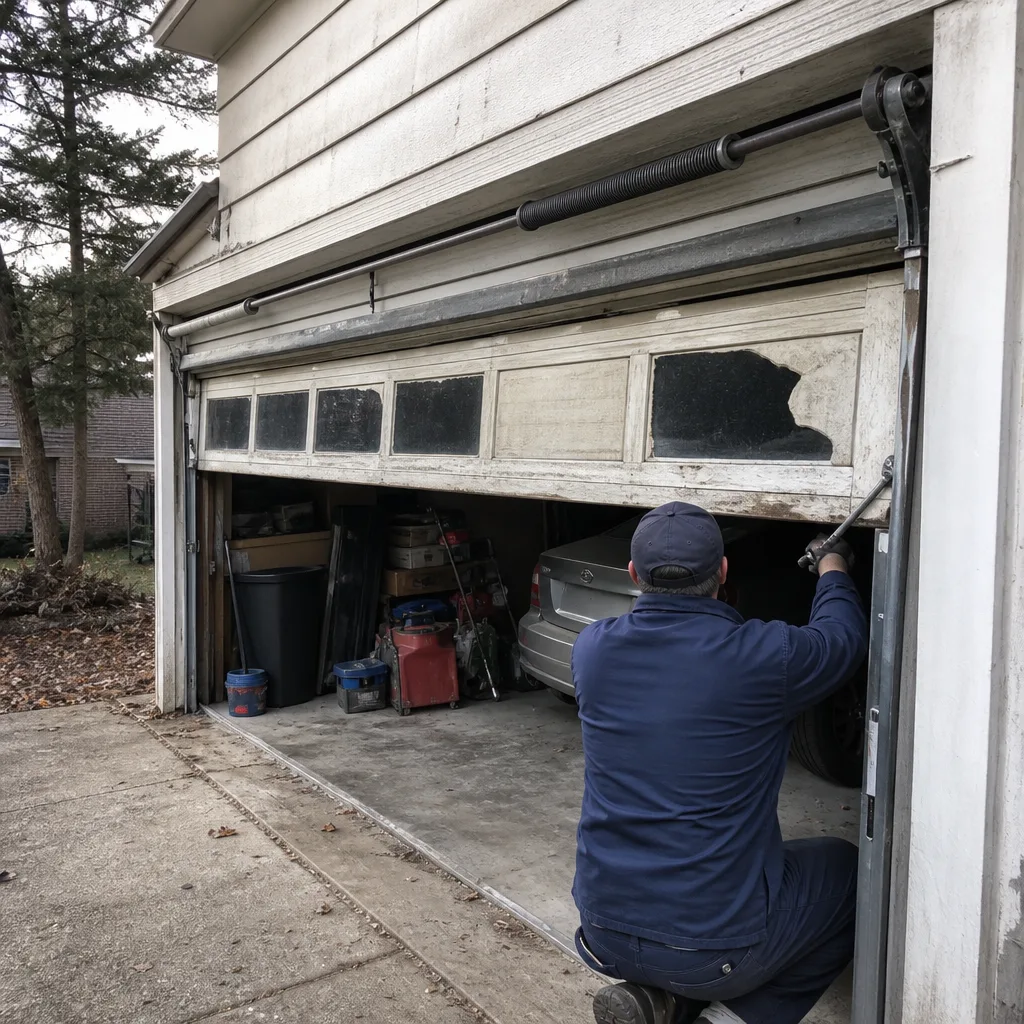 Before
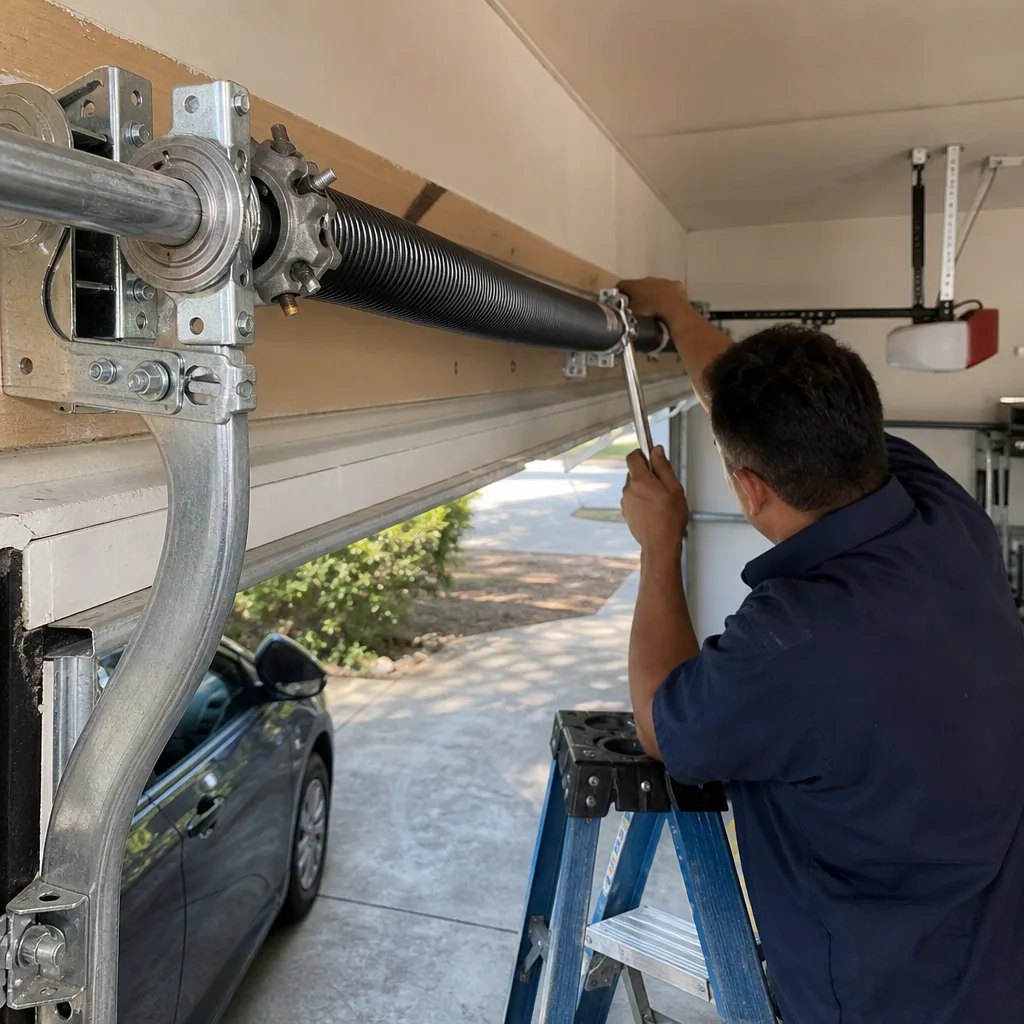 After
After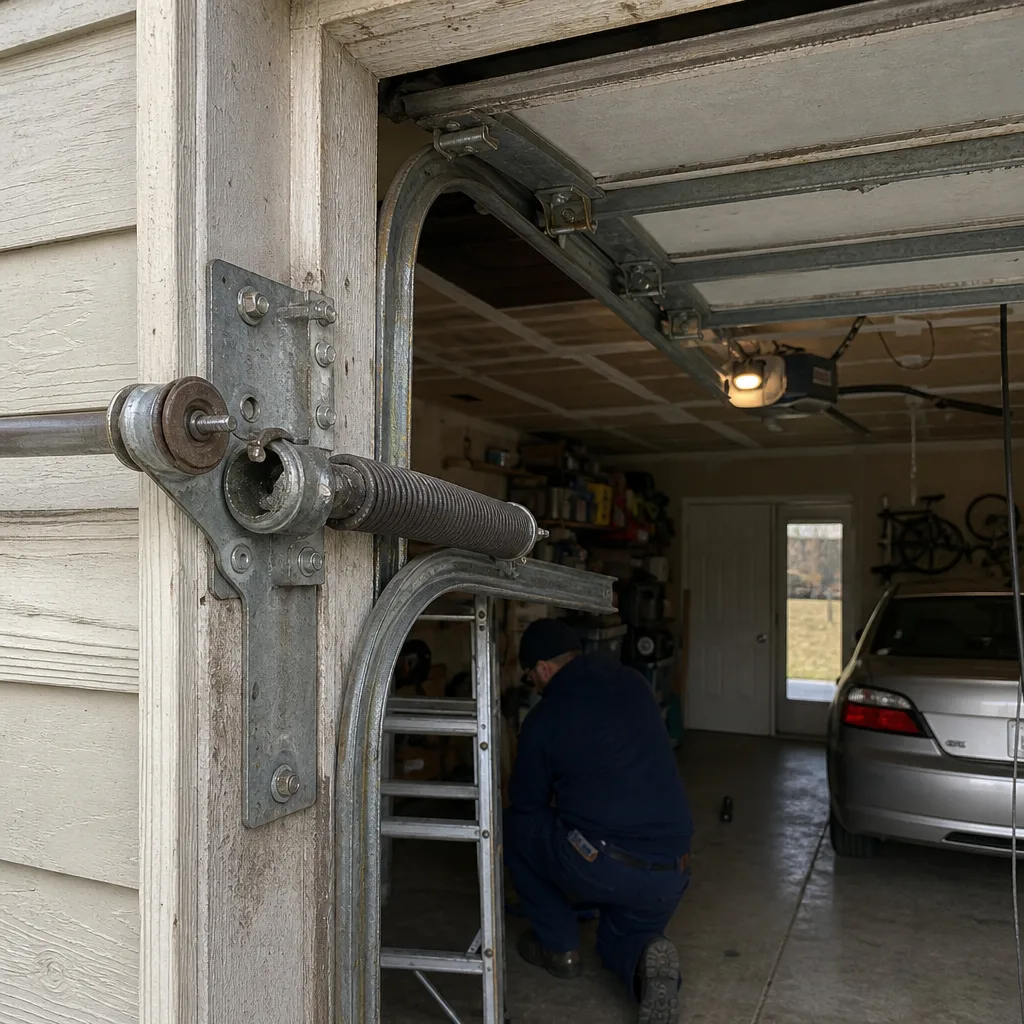 Before
 After
After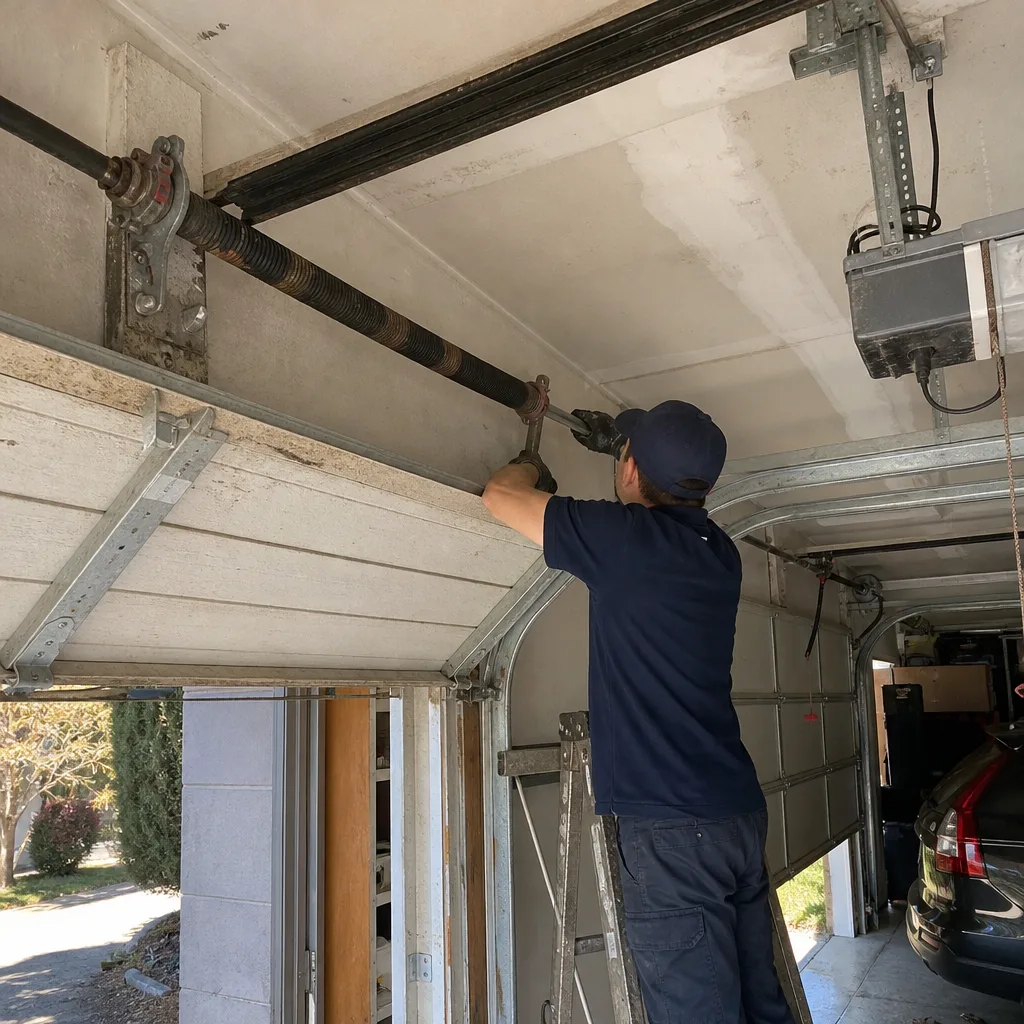 Before
 After
After